

Are BJJ and Judo Gis the Same? Key Differences Explained (2026)
Reviewed by black belts with competition experience in both BJJ and Judo | Last Updated: January 14, 2026
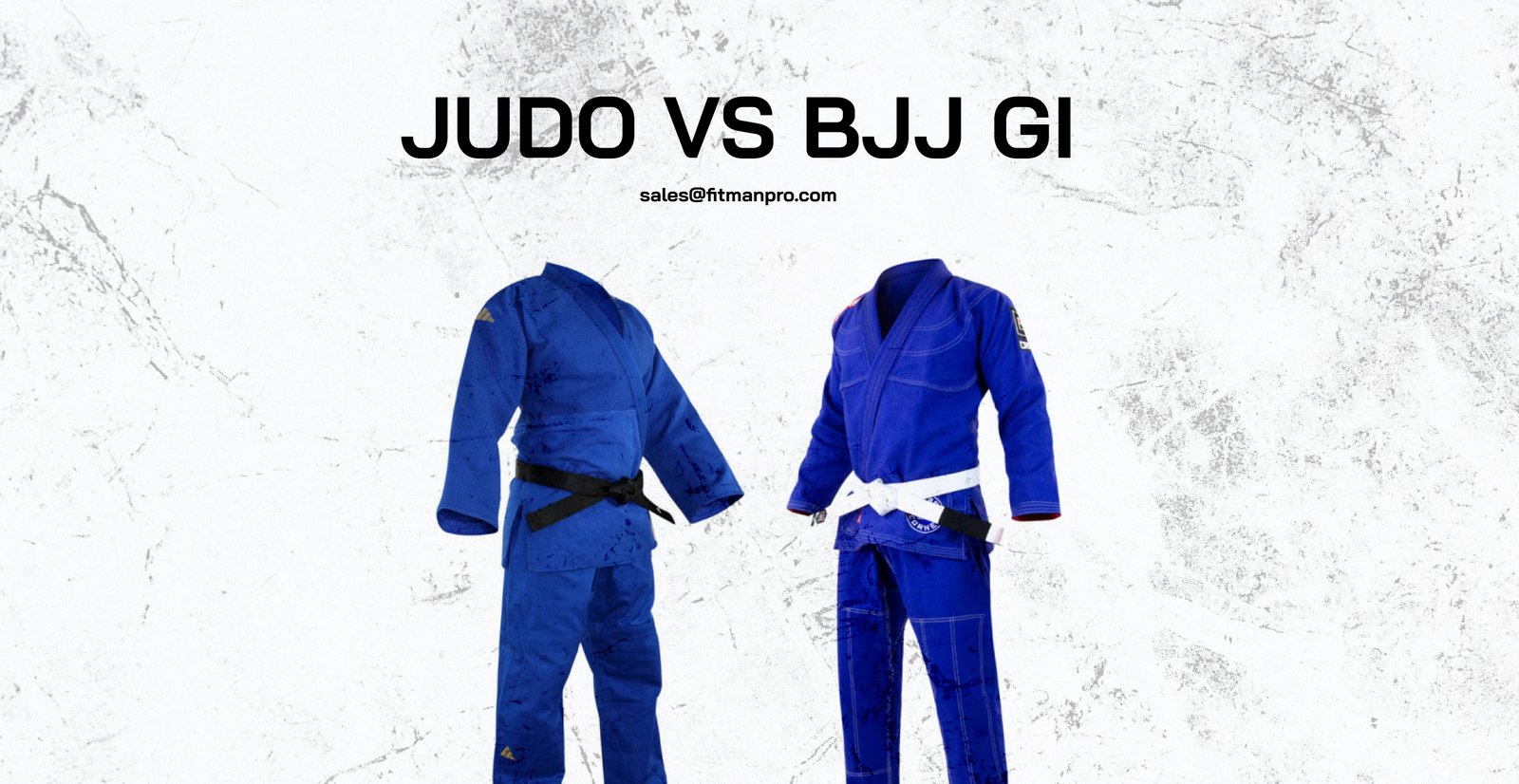
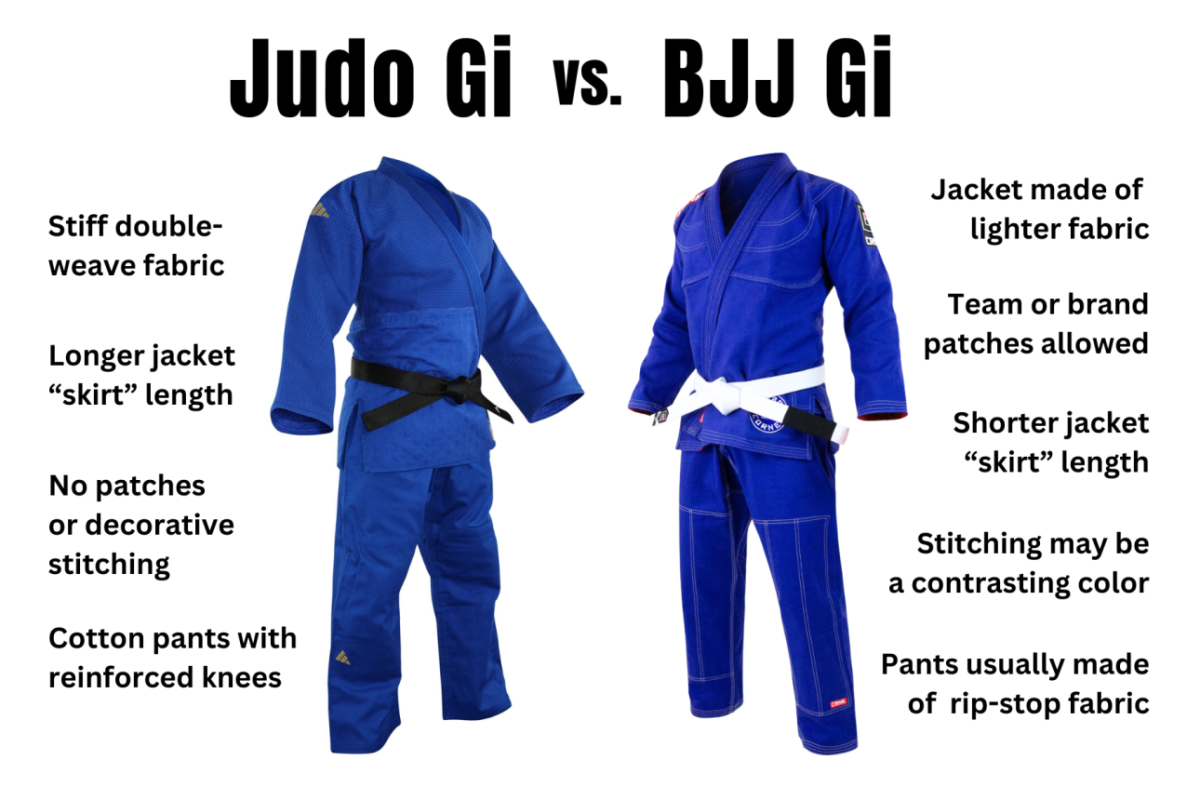
No, BJJ and Judo gis are not the same—they have significant differences in fit, sleeve length, skirt length, weight, and construction designed for their respective sports. Judo gis feature looser fits with longer, wider sleeves (designed for gripping during throws), heavier double-weave fabric (550-750 GSM), and longer skirts to withstand standing grappling, while BJJ gis have tailored fits with shorter, narrower sleeves (preventing excessive gripping), lighter pearl-weave fabric (350-550 GSM), and shorter skirts optimized for ground fighting. While you can use a Judo gi for BJJ training—especially as a beginner—it won’t meet IBJJF competition regulations for sleeve length and may give opponents easier gripping advantages in techniques like spider guard and lasso guard.
Gold BJJ explains the fundamental design difference: “Judo gis are designed to withstand intense throwing and gripping, while BJJ gis are tailored for groundwork and submission grappling”. Elite Sports confirms the practical impact: “A Judo gi can absolutely be used for training BJJ, especially if you’re just starting out, but there are key differences that may affect your performance as you advance”.
This guide provides a comprehensive comparison of BJJ and Judo gis, covering technical specifications, competition regulations, which techniques are affected by gi differences, and practical buying recommendations.
Table of Contents
Key Differences: BJJ Gi vs Judo Gi
Fit and Cut
Judo Gi Fit:
- Looser, baggier fit throughout jacket and pants
- Designed for throwing and standing grappling
- More fabric to grip during throws
- Traditional, boxy cut
- Allows maximum mobility for dynamic movements
BJJ Gi Fit:
- Tailored, form-fitting cut (especially modern competition gis)
- Designed to minimize gripping opportunities
- Less excess fabric for opponents to grab
- Athletic, streamlined fit
- Optimized for ground fighting positions
Matsuru explains the strategic difference: “BJJ gis are typically more fitted to reduce grip opportunities for opponents, while Judo gis have a looser fit to accommodate dynamic throwing techniques”.
Impact on techniques:
- Looser Judo gi makes collar chokes easier to set up
- Tighter BJJ gi reduces spider guard and lasso guard effectiveness for opponents
- Judo gi provides more material for bow and arrow choke and lapel-based attacks
Sleeve Length and Width
Judo Gi Sleeves:
- Longer sleeves – extend closer to wrists (5-7 cm from wrist bone)
- Wider sleeves – more fabric throughout
- Designed for standing gripping during throws
- IJF regulations require specific length for gripping
BJJ Gi Sleeves:
- Shorter sleeves – IBJJF requires sleeves within 5 cm of wrist
- Narrower sleeves – minimum 7 cm opening when arm extended
- Designed to limit opponent’s gripping options
- Strategic advantage in guard play
Elite Sports notes: “Judo sleeves are generally longer and wider to facilitate gripping, which is essential for executing throws, while BJJ sleeves are shorter and tighter to prevent opponents from easily controlling your arms during ground fighting”.
IBJJF Competition Requirements:
- Sleeves must come to no more than 5 cm from wrist when arm extended parallel to ground
- Sleeve opening at full extension must be at least 7 cm wide
- Judo gi sleeves often fail this inspection (too long, too wide)
Techniques affected by sleeve length/width:
- Spider Guard – longer Judo sleeves give opponent more control
- Lasso Guard – easier to wrap longer sleeves
- Closed Guard – sleeve control more effective with longer fabric
- Open Guard retention – all sleeve-based grips affected
Skirt (Jacket) Length
Judo Gi Skirt:
- Longer jacket – extends mid-thigh or lower
- Designed to stay tucked during throws and standing grappling
- More fabric available for gripping
- Traditional longer cut
BJJ Gi Skirt:
- Shorter jacket – IBJJF requires jacket reach thigh
- Optimized for ground positions (mount, guard, side control)
- Less excess fabric
- Won’t ride up during rolling
Estilo MMA explains: “The Judo gi jacket is usually longer than the BJJ gi to prevent it from coming untucked during throws and standing techniques”.
IBJJF Requirements:
- Gi top must reach athlete’s thigh
- Judo gi usually exceeds this (longer skirt)
- May be competition-legal depending on specific measurement
Techniques affected:
- More fabric = easier cross collar choke setup
- Longer skirt provides more material for baseball choke
- Can interfere with mount position mobility
Weight and Fabric Construction
Judo Gi Weight:
- Heavier fabric – typically 550-750 GSM (grams per square meter)
- Double-weave construction most common
- Designed for durability during throwing
- Harder to grip (strategic advantage in Judo)
- More rigid, less comfortable in heat
BJJ Gi Weight:
- Lighter fabric – typically 350-550 GSM
- Pearl-weave construction most popular
- Optimized for ground fighting and comfort
- Easier to grip (intentional for BJJ techniques)
- More breathable for longer rolling sessions
BJJ Fanatics explains: “Experienced Judokas tend to go for the double weave gi, which is a much heavier jacket and is a lot harder to secure grips. In BJJ, professionals prefer the pearl weave gi, which is the best of both worlds—durable like a double weave but lightweight like a single weave”.
Weave types explained:
Double-Weave:
- Heavier (600-750 GSM)
- Most durable
- Standard for Judo
- Less comfortable in hot conditions
Pearl-Weave:
- Medium weight (400-550 GSM)
- Lightweight yet durable
- Most popular for BJJ
- Breathable and comfortable
Single-Weave:
- Lightest (350-450 GSM)
- Less durable
- Best for training in hot climates
- Not recommended for intense competition
Gold-Weave:
- Medium-weight (450-550 GSM)
- Balance of durability and flexibility
- Moderate popularity in BJJ
Impact on training:
- Heavier Judo gi = more tiring to wear during long sessions
- Lighter BJJ gi = better for hot gyms and extended rolling
- Weight affects grip fighting (heavier = harder to grip)
Collar Thickness
Judo Gi Collar:
- Thicker, stiffer collar
- Designed to withstand standing gripping and pulling
- Harder for opponent to grip deeply
- More rigid construction
BJJ Gi Collar:
- Thinner collar – IBJJF maximum 1.3 cm thick
- Optimized for ground-based collar chokes
- Easier to manipulate for submissions
- More flexible
IBJJF Requirements:
- Lapel thickness: maximum 1.3 cm
- Collar width: 5 cm
- Judo gi collars may exceed thickness limit
Techniques affected:
- Cross Collar Choke – thinner collar easier to grip deeply
- Bow and Arrow Choke – collar manipulation easier with thinner material
- Ezekiel Choke – gi material flexibility matters
- Loop Choke – collar manipulation critical
- Baseball Choke – grip depth affected by thickness
Pants Construction
Judo Gi Pants:
- Reinforced knees for ne-waza (ground work)
- Typically cotton or cotton blend
- Looser fit in legs
- Drawstring closure standard
BJJ Gi Pants:
- Heavy reinforcement in knees (frequent ground contact)
- Often include rope drawstring or elastic + drawstring
- Tighter fit around legs and ankles
- IBJJF requires pants within 5 cm of ankle bone
IBJJF Requirements:
- Pants must reach no more than 5 cm above ankle bone
- Both Judo and BJJ pants typically meet this
- Tighter BJJ pants prevent De La Riva guard pant grips
Techniques affected:
- Looser Judo pants = easier pant gripping for DLR guard
- Tighter BJJ pants = harder to establish pant grips
- Butterfly guard and X-guard pant control affected
Color Options
Judo Gi Colors:
BJJ Gi Colors:
- White, blue, or black for IBJJF competition
- Many academies allow any color for training
- Wide variety available (navy, gray, green, etc.)
- Color restrictions vary by competition
Competition requirements:
- IBJJF: white, blue, or black only
- Local tournaments: often more permissive
- Academy training: varies by school policy
Can You Use a Judo Gi for BJJ?
Yes, for Training (With Limitations)
Elite Sports confirms: “A Judo gi can absolutely be used for training BJJ, especially if you’re just starting out”.
When Judo gi works for BJJ training:
- White belt beginners (first few weeks/months)
- Casual training (not preparing for competition)
- Budget constraints (already own Judo gi)
- Cross-training in both Judo and BJJ
- Gi doesn’t matter as much while learning fundamentals
Estilo MMA notes: “For everyday training, using a Judo gi for BJJ is perfectly acceptable, especially if you’re a beginner”.
No, for Competition (IBJJF)
IBJJF regulations that Judo gi often violates:
Sleeve requirements:
- Must be within 5 cm of wrist when arm extended
- Judo sleeves often too long (6-8 cm from wrist)
- Will fail gi check at weigh-in
Sleeve width:
- Must be minimum 7 cm opening when arm extended
- Judo sleeves often wider (easier for opponent to grip)
- May pass or fail depending on specific gi
Collar thickness:
- Maximum 1.3 cm thick
- Some Judo gis exceed this
- Inspector will measure with caliper
Other requirements:
- Collar width: 5 cm
- Lapel thickness: 1.3 cm maximum
- Reinforcements: no more than 2.5 cm
- Gi must be white, blue, or black
Reddit r/bjj consensus: “Judo gi will likely fail IBJJF gi check due to sleeve length”.
Disadvantages in BJJ Training
Even for training, Judo gi has drawbacks:
Easier for opponents to grip:
- Longer sleeves = more effective spider guard against you
- Wider sleeves = easier lasso guard wrapping
- Longer skirt = more material for cross collar chokes
- Looser pants = easier De La Riva pant grips
Less optimal for ground fighting:
- Heavier weight (600-750 GSM) = more tiring during long rolling sessions
- Baggier fit = fabric bunches in mount position and back control
- Excess material can interfere with movement
Not developing proper habits:
- If you train in Judo gi, then compete in BJJ gi, feel is completely different
- Better to train in same gi type you’ll compete in
- Muscle memory for grip fighting differs
When It Makes Sense
Use Judo gi for BJJ if:
- ✅ You’re a white belt in first 1-2 months
- ✅ You already own Judo gi and can’t afford BJJ gi yet
- ✅ You’re cross-training both Judo and BJJ casually
- ✅ Your academy allows it for training
- ✅ You understand the disadvantages
Buy BJJ gi instead if:
- ❌ You plan to compete in BJJ (IBJJF or most tournaments)
- ❌ You’re past beginner stage (blue belt+)
- ❌ You want optimal training equipment
- ❌ You’re serious about BJJ belt progression
Can You Use a BJJ Gi for Judo?
Depends on Regulations and Durability
Reddit r/judo discussion: Responses vary—some Judo clubs accept BJJ gis for training, others require traditional Judo gis.
Color requirements for Judo:
- White or blue only for IJF competition
- Black BJJ gi won’t be allowed
- White or blue BJJ gi may work for training
Durability concerns:
- BJJ gis (350-550 GSM) thinner than Judo standard (550-750 GSM)
- May not withstand repeated throwing
- Sleeves can tear from aggressive gripping during standing techniques
- Pearl-weave less durable than double-weave for throws
Matsuru warns: “Judo gis are built to withstand the intense pulling and gripping during throws—a lighter BJJ gi may not hold up”.
IJF Competition Requirements
For international Judo competition:
- Red-labeled IJF-approved gi required (as of April 1, 2015)
- Identification number must appear on jacket and pants
- BJJ gi will not meet these requirements
- National/regional tournaments may be more lenient
When BJJ Gi Works for Judo
Use BJJ gi for Judo if:
- ✅ Casual training only (not competition)
- ✅ White or blue color
- ✅ Heavier BJJ gi (500+ GSM)
- ✅ Academy allows it
- ✅ Understanding it may wear faster
Buy Judo gi instead if:
- ❌ Competing in Judo
- ❌ Serious about Judo progression
- ❌ Doing aggressive throwing practice
- ❌ Want proper durability
Which BJJ Techniques Are Most Affected by Gi Differences?
Guard Techniques (Heavily Affected)
Using spider guard against opponent in Judo gi:
- Longer sleeves = easier to establish sleeve control
- Wider sleeves = more fabric to grip
- Easier to maintain spider guard hooks
- More effective for you
Opponent using spider guard against your Judo gi:
- They get better control due to sleeve length
- Harder for you to break grips
- Disadvantage if you wear Judo gi
Lasso Guard:
Lasso guard heavily dependent on sleeve length:
- Judo gi sleeves easier to wrap around arm
- More secure lasso control
- Opponent gets significant advantage against your Judo gi
De La Riva Guard:
De La Riva guard uses pant grips:
- Looser Judo gi pants = easier pant gripping for opponent
- Tighter BJJ pants = harder to establish DLR hooks
- Judo gi pants give opponent advantage
Open Guard Systems:
All open guard variations affected:
- Butterfly guard – sleeve control easier with longer fabric
- X-guard – pant grips affected by fit
- Half guard – sleeve and pant control both impacted
Closed Guard:
Closed guard breaking and control:
- Longer Judo sleeves easier to control for breaking posture
- Opponent can more easily control your arms if you wear Judo gi
- Affects setup for triangle choke and armbar
Collar Chokes (Moderately Affected)
Cross Collar Choke:
Cross collar choke execution:
- Thicker Judo collar = harder to grip deeply (defensive advantage)
- More collar material = easier to establish initial grip (offensive advantage)
- Judo gi can work both ways
Bow and Arrow Choke:
Bow and arrow choke from back:
- Longer Judo gi skirt = more lapel material available
- Easier to establish grip for the choke
- Advantage for person attacking Judo gi wearer
Baseball Choke:
Baseball choke mechanics:
- Extra gi material in Judo gi = easier grip establishment
- Longer skirt provides more fabric to work with
- Slight advantage when attacking Judo gi
Ezekiel Choke:
Ezekiel choke from mount:
- Sleeve grip required
- Judo gi sleeve length and stiffness affect setup
- Minimal difference in effectiveness
Loop Choke:
Loop choke from guard:
- Collar manipulation important
- Thicker Judo collar harder to manipulate
- Slight defensive advantage for Judo gi
Sweeps (Minimally Affected)
Scissor Sweep:
Scissor sweep execution:
- Sleeve control component
- Longer Judo sleeves = easier control
- Minimal practical difference
Butterfly Sweep:
Butterfly sweep mechanics:
- Sleeve and collar grips
- Longer sleeves helpful but not critical
- Technique works with both gis
Takedowns (Affected by Gi Type)
Double Leg Takedown:
Double leg takedown execution:
- No-gi technique adapted to gi
- Gi type less relevant
- Works similarly with both
Single Leg Takedown:
Single leg takedown mechanics:
- Pant grip may be involved
- Looser Judo gi pants easier to grip
- Minor difference
Judo Throws:
- Designed for Judo gi specifically
- Gripping longer, wider sleeves essential
- Much harder with tight BJJ gi sleeves
- Judo techniques favor Judo gi construction
Submissions (Lightly Affected)
Joint locks like armbar, kimura, and omoplata largely unaffected by gi type—mechanics work the same regardless of sleeve length or collar thickness.
Back attacks like rear naked choke are gi-independent and work equally well with both gi types.
Competition Regulations: IBJJF vs IJF
IBJJF Gi Requirements (BJJ)
Official measurements from IBJJF uniform rules:
Gi Top:
- Must reach athlete’s thigh
- Sleeves: within 5 cm of wrist when arm extended parallel to ground
- Sleeve opening at full extension: minimum 7 cm
- Lapel thickness: maximum 1.3 cm
- Collar width: 5 cm
- Reinforcements: maximum 2.5 cm
Gi Pants:
- Must reach no more than 5 cm above ankle bone (tibial malleolus)
- No specific width requirements
Colors:
- White, blue, or black only
- Entire gi must be same color (top and bottom match)
Belt:
- 4-5 cm wide
- Colored according to rank
- Black tip (except black belts: white or red tip)
- Must wrap around waist twice
- Each end 20-30 cm after tying double knot
Patches:
Why Judo gi often fails IBJJF inspection:
- Sleeves too long (6-8 cm from wrist vs. 5 cm maximum)
- Sleeves may be too wide
- Collar may be too thick (over 1.3 cm)
- Skirt length usually passes but can be excessive
IJF Gi Requirements (Judo)
Official IJF regulations:
For international competition:
- Red-labeled IJF-approved gi required (since April 1, 2015)
- Identification number must appear on jacket and pants
- White or blue only
- Specific length requirements for different weight classes
Length requirements by weight:
- Athletes under 73 kg: minimum 20 cm from wrist
- Athletes over 73 kg: minimum 25 cm from wrist
- Much longer than IBJJF requirements
National/regional competitions:
- Often more lenient than IJF standards
- May not require red-labeled gi
- Local federation rules apply
Why BJJ gi often won’t work for Judo competition:
- Sleeves too short for IJF requirements
- No IJF red label/identification number
- Black color not allowed
- May not meet durability standards
Summary Comparison
| Requirement | IBJJF (BJJ) | IJF (Judo) |
|---|---|---|
| Sleeve length | Within 5 cm of wrist | 20-25 cm from wrist (much longer) |
| Sleeve opening | Minimum 7 cm | No specific requirement (wider allowed) |
| Skirt length | Must reach thigh | Longer (mid-thigh+) |
| Colors | White, blue, black | White, blue only |
| Collar thickness | Maximum 1.3 cm | Thicker allowed |
| Approval | No pre-approval needed | Red-labeled IJF approval for international |
| Weight | No minimum (350+ GSM typical) | Heavier (550+ GSM typical) |
Key takeaway: Judo gi and BJJ gi are optimized for different regulations and won’t cross over for serious competition.
Which Gi Should You Buy?
If You’re Doing BJJ Only
Buy a BJJ gi:
- ✅ IBJJF competition-legal
- ✅ Optimized for ground fighting
- ✅ Lighter weight (more comfortable for rolling)
- ✅ Tailored fit (reduces gripping opportunities)
- ✅ Shorter sleeves (defensive advantage against spider guard)
- ✅ Better for belt system progression
Recommended for:
- White belts starting BJJ journey
- Blue belts preparing for competition
- Anyone serious about BJJ
Budget options:
- Entry-level BJJ gi: $60-$90
- Mid-range: $90-$130
- Competition/premium: $130-$200
If You’re Doing Judo Only
Buy a Judo gi:
- ✅ IJF competition-legal (if red-labeled)
- ✅ Optimized for throwing
- ✅ Durable construction (withstands gripping)
- ✅ Proper sleeve length for Judo techniques
- ✅ Traditional fit and feel
Recommended for:
- Judo practitioners competing under IJF rules
- Traditional Judo training
- Anyone serious about Judo progression
Budget options:
- Entry-level Judo gi: $50-$80
- Mid-range: $80-$120
- IJF-approved competition: $120-$200+
If You’re Doing Both BJJ and Judo
Buy a BJJ gi (more versatile):
Elite Sports recommends: “If you’re cross-training in both arts, a BJJ gi tends to be more versatile for both disciplines at the training level”.
Why BJJ gi works better for both:
- ✅ Acceptable for casual Judo training (white/blue colors)
- ✅ Competition-legal for BJJ (IBJJF)
- ✅ Lighter and more comfortable
- ✅ One gi serves both purposes (budget-friendly)
When you need both gis:
- ❌ Competing seriously in both sports
- ❌ BJJ gi won’t survive competitive Judo throwing
- ❌ Need proper equipment for each discipline
Compromise approach:
- Buy heavier BJJ gi (500+ GSM) with reinforced stitching
- White or blue color
- Use for both casual training
- Buy sport-specific gi when competing
First Gi Buying Guide
For brand-new white belts starting BJJ:
Budget: Under $100
- Single or pearl-weave construction
- White color (most versatile)
- IBJJF competition-legal
- Durable stitching
- A1-A4 sizing (pre-shrunk if possible)
Features to prioritize:
- Proper fit (not too baggy, not too tight)
- Reinforced stress points (armpits, knees)
- Pre-shrunk or shrink-to-fit sizing
- Pearl weave or gold weave (good balance)
- IBJJF legal measurements
Features to skip (as beginner):
- Premium branding (doesn’t improve performance)
- Fancy colors (may not be competition-legal)
- Ultra-lightweight competition gis (less durable)
Gi Care and Maintenance (Both Types)
Washing Instructions
Proper gi care extends lifespan:
After every training session:
- Wash immediately (don’t leave in bag)
- Cold water wash (prevents excessive shrinkage)
- Mild detergent (no bleach)
- Hang dry or low-heat tumble dry
Avoid:
- ❌ Hot water (causes shrinkage)
- ❌ High heat drying (damages fabric)
- ❌ Bleach (weakens fibers)
- ❌ Fabric softener (reduces grip on gi)
- ❌ Leaving in gym bag overnight (bacteria growth)
Gold BJJ notes: “Proper care is essential for both Judo and BJJ gis—wash cold, hang dry, and avoid fabric softener to maintain grip and durability”.
Shrinkage Considerations
Both Judo and BJJ gis shrink:
- Cotton gis shrink 2-5% with first wash
- Hot water causes excessive shrinkage
- High heat drying shrinks significantly
- Pre-shrunk gis minimize this (but still shrink slightly)
Managing shrinkage:
- Buy slightly larger if planning hot washes
- Cold water + hang dry maintains size
- Test shrinkage with first wash before competition
- Competition gi should be pre-washed to know exact fit
Durability Expectations
Judo gi lifespan:
- Double-weave construction: 3-5 years of regular training
- Heavy use (throwing): 2-3 years
- Most durable due to thick fabric
BJJ gi lifespan:
- Pearl-weave construction: 2-4 years of regular training
- Competition use: 1-2 years (frequent washing)
- Lighter weight = faster wear
Signs of replacement needed:
- Frayed collar or sleeves
- Thin fabric (can see through)
- Tears in stress points
- Excessive shrinkage (no longer fits)
- Loss of structural integrity
Frequently Asked Questions
Can I use a Judo gi for BJJ training?
Yes, you can use a Judo gi for BJJ training, especially as a beginner, but it has significant disadvantages. Elite Sports confirms that “a Judo gi can absolutely be used for training BJJ, especially if you’re just starting out”. However, the longer, wider sleeves make you more vulnerable to spider guard and lasso guard attacks, and Judo gis won’t pass IBJJF gi inspection for competition due to sleeve length violations.
Will a Judo gi pass IBJJF gi check?
No, most Judo gis will not pass IBJJF gi inspection because their sleeves are too long. IBJJF requires sleeves to be within 5 cm of the wrist when the arm is extended, with a minimum 7 cm sleeve opening. Judo gi sleeves are typically 6-8 cm from the wrist (longer) and wider to facilitate gripping for throws, violating IBJJF regulations. Additionally, some Judo gi collars exceed the maximum 1.3 cm thickness requirement.
What’s the main difference between BJJ and Judo gis?
The main differences are fit, sleeve length, and weight. Gold BJJ explains: “Judo gis are designed to withstand intense throwing and gripping with looser fits, longer/wider sleeves, and heavier double-weave fabric (550-750 GSM), while BJJ gis are tailored for groundwork with tighter fits, shorter/narrower sleeves, and lighter pearl-weave fabric (350-550 GSM)”. These differences affect gripping in techniques like spider guard and collar chokes.
Can I use a BJJ gi for Judo?
Yes, for casual Judo training (white or blue colors only), but not for serious competition. BJJ gis are lighter (350-550 GSM) than the standard Judo double-weave (550-750 GSM) and may not withstand aggressive throwing and gripping. For IJF international competition, you need a red-labeled IJF-approved gi with identification numbers, which BJJ gis don’t have. Additionally, black BJJ gis aren’t allowed in Judo (white/blue only), and BJJ gi sleeves may be too short for Judo techniques.
Which is heavier, Judo gi or BJJ gi?
Judo gis are significantly heavier, typically 550-750 GSM with double-weave construction, while BJJ gis are lighter at 350-550 GSM with pearl-weave construction. BJJ Fanatics notes that “experienced Judokas prefer double weave gis which are much heavier and harder to grip, while BJJ professionals prefer pearl weave gis that are durable like double weave but lightweight like single weave”. The weight difference affects comfort during long training sessions and grip-fighting strategies.
Why are Judo gi sleeves longer than BJJ gi sleeves?
Judo gi sleeves are longer and wider (5-7 cm from wrist) to facilitate gripping for throws and standing techniques, which are essential in Judo. BJJ gi sleeves are shorter (within 5 cm of wrist per IBJJF rules) and narrower to limit opponents’ gripping opportunities during ground fighting. Elite Sports explains: “Judo sleeves facilitate gripping essential for executing throws, while BJJ sleeves prevent opponents from easily controlling your arms during ground fighting”. This affects techniques like spider guard and lasso guard.
Should I buy a Judo gi or BJJ gi if I do both?
Buy a BJJ gi if you do both sports casually. Elite Sports recommends: “If you’re cross-training in both arts, a BJJ gi tends to be more versatile for both disciplines at the training level”. A white or blue BJJ gi (500+ GSM for durability) works for both casual training, is IBJJF competition-legal for BJJ, and acceptable for most Judo clubs. However, if competing seriously in both sports, you’ll need sport-specific gis—BJJ gis won’t survive competitive Judo throwing, and Judo gis won’t pass IBJJF inspection.
What weave type is best for BJJ?
Pearl-weave is the most popular for BJJ, offering the best balance of durability (like double-weave) and light weight (like single-weave). BJJ Fanatics states: “BJJ professionals prefer the pearl weave gi, which is the best of both worlds—durable like a double weave gi but lightweight like a single weave gi”. Pearl-weave (400-550 GSM) is breathable for long rolling sessions, durable enough for regular training, and comfortable in hot gyms. Gold-weave (450-550 GSM) is another excellent option offering similar benefits.
Start Your BJJ Journey with Proper Equipment
Essential Resources:
- BJJ Belt System – Understand your progression
- White Belt Guide – Start your journey right
- What is Guard in BJJ? – Core concept explained
Techniques Where Gi Type Matters:
- Spider Guard – Heavily affected by sleeve length
- Lasso Guard – Sleeve wrapping control
- Cross Collar Choke – Collar thickness matters
- De La Riva Guard – Pant grip control
Related Comparisons:
- BJJ vs Wrestling – Gi vs no-gi context
- Are BJJ Instructionals Worth It? – Learning resources
The bottom line: While Judo and BJJ gis share similarities (both are traditional martial arts uniforms with jackets, pants, and belts), they’re designed for fundamentally different grappling styles—Judo gis prioritize durability and gripping for throwing, while BJJ gis optimize for ground fighting with lighter weight and tighter fits. For BJJ practitioners, invest in a proper BJJ gi that meets IBJJF regulations and provides competitive advantages in guard work and reduces opponents’ gripping opportunities.
Train smart. Wear the right gi. Progress through the belts. 🥋
How We Reviewed This Article
Editorial Standards: Information verified through IBJJF and IJF official regulations, manufacturer specifications, practitioner feedback from both BJJ and Judo communities, and input from black belts with competition experience in both arts.
Sources Referenced:
- IBJJF Official Uniform Requirements (ibjjf.com)
- IJF Official Judogi Regulations (kusakurashop.com)
- Gold BJJ (gi comparison analysis)
- Elite Sports (practical usage guide)
- BJJ Fanatics (weave types and construction)
- Matsuru (technical specifications)
- Reddit r/bjj and r/judo (practitioner consensus)
Last Updated: January 14, 2026