

By BJJ Sportswear Editorial Team
Reviewed by competitive black belts specializing in Kimura systems | Last Updated: January 11, 2026
The kimura lock is BJJ’s most versatile grip and submission. Named after legendary judoka Masahiko Kimura who used it to defeat Helio Gracie in their famous 1951 match, the kimura is more than just a submission—it’s a dominant controlling grip that creates guard passes, back takes, sweeps, and throws.
According to Evolve MMA’s kimura analysis, the kimura grip is by far the most versatile grip in Brazilian Jiu-Jitsu, whether grappling with or without the gi. While mostly known as a powerful submission hold, viewing the kimura as only useful for submitting would be a big mistake as it has several other useful applications.
BJJ Fanatics notes that the position has become one of the most favored by contemporary athletes because of its versatility and availability. A number of athletes have popularized a “Kimura Trap” system which uses the kimura as a controlling position that sets up other techniques and submissions.
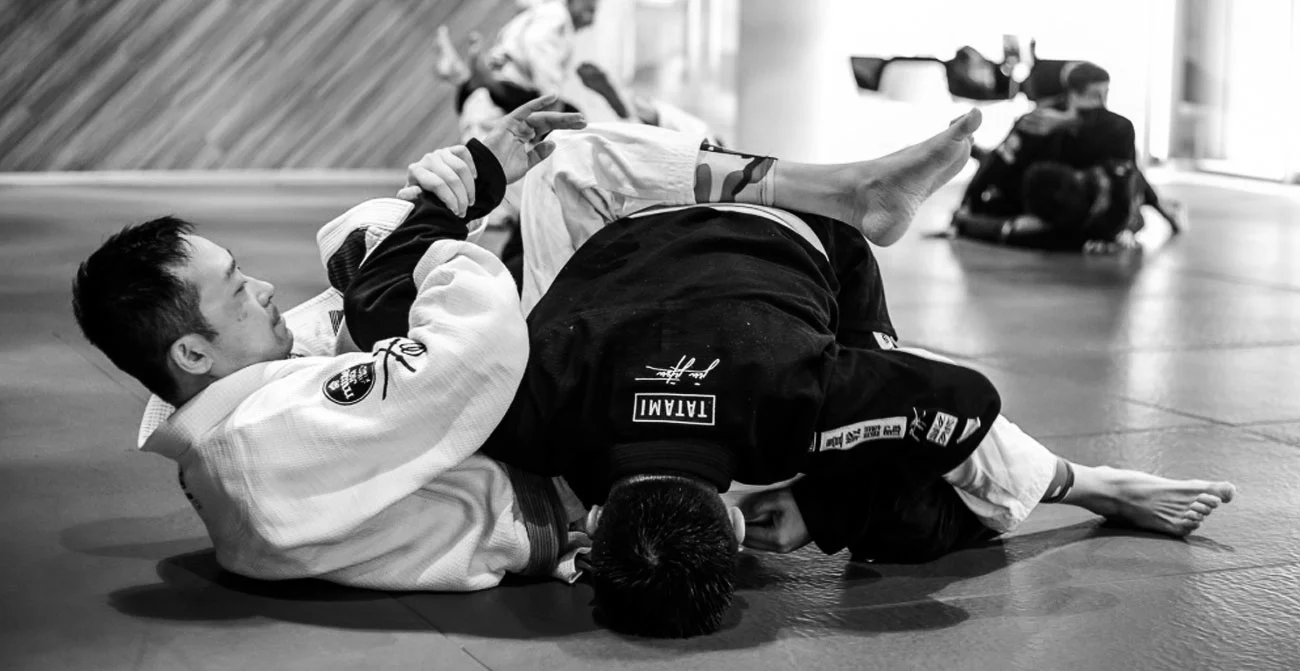
Table of Contents
What Is the Kimura Lock?
The kimura is a shoulder lock submission that controls your opponent’s arm in a figure-four grip, then rotates their arm behind their back to create shoulder pressure.
Core kimura mechanics:
- Figure-four grip (control their wrist, thread your other arm behind their elbow, grab your own wrist)
- Their arm bent at 90-degree angle
- Arm isolated and controlled
- Rotation toward their back creates shoulder pressure
- Works from top, bottom, or standing positions
- Functions as submission and control position
BJJ Fanatics describes that this hand placement creates a powerful grip that makes a strong “chicken wing” of the opponent’s arm and keeps the arm at a 90-degree angle.
The Historic Kimura vs Gracie Match
The submission’s name comes from one of grappling’s most legendary matches. On October 23, 1951, Masahiko Kimura (80kg Japanese judo champion) faced Helio Gracie (63kg BJJ founder) at Maracanã Stadium in Rio de Janeiro. Kimura defeated Gracie using this shoulder lock, and Gracie’s arm was broken when he refused to tap. Out of respect, Brazilians renamed the technique “kimura.”
This historic match cemented the kimura’s place in grappling history and showed its devastating effectiveness even against legendary fighters.
Why the Kimura Works Everywhere
The kimura works from virtually every position. You can apply it from top positions like side control, mount, north-south, knee on belly, turtle, and standing. It also works from bottom positions including closed guard, half guard, open guard, and butterfly guard. The technique works identically in gi and no-gi with minimal modifications. This versatility is unmatched by any other submission in BJJ.
Evolve MMA emphasizes that the key to mastering the kimura is to view it as a grip that can be used for a variety of means, including taking the back, passing the guard, and even throwing your opponent.
The kimura creates:
- Guard passes
- Back takes
- Sweeps from bottom
- Takedown counters
- Position transitions
- Submission finishes
Viewing the kimura only as a submission misses 80% of its potential. The kimura connects naturally to techniques covered in previous articles. From half guard, it’s a common entry from top that creates guard passing opportunities. After completing a knee slice pass to side control, opponents often post their arm, creating a kimura opportunity. The kimura also creates back take opportunities where the arm is already controlled for a rear naked choke, making it one of the highest-percentage back entries.
Kimura Grip Fundamentals
Proper grip mechanics are essential for the kimura to work.
Grip sequence:
- Control their wrist with your near hand (thumbless grip)
- Thread your far arm behind their elbow
- Grab your own wrist (creates figure-four)
- Maintain 90-degree angle in their arm
- Keep grip tight to your chest
The grip should feel like you’re hugging their arm to your chest—tight and secure throughout the entire technique.
BJJ Fanatics emphasizes that the kimura creates a strong “chicken wing” of the opponent’s arm and keeps the arm at a 90-degree angle. This 90-degree angle provides maximum control over the limb, optimal leverage for finishing, prevents them from straightening their arm, and creates the strongest structural position. Without the 90-degree angle, your opponent can defend by straightening their arm or by gripping their belt.
Opponents defend the kimura predictably. They try to straighten their targeted arm to make establishing the grip difficult and prevent the 90-degree configuration. They also grab their own belt or gi with the attacked hand, creating a defensive frame that makes finishing harder.
Kimura from Closed Guard
The fundamental entry for beginners starts from closed guard. When your opponent is in your guard and posts one or both hands on the mat (a common mistake), this creates your kimura opportunity.
Step-by-step execution:
- Control wrist: Grab the posted hand’s wrist with your near hand and secure control before they react.
- Sit up and thread: Open your guard and plant your feet. Sit up driving forward, thread your far arm behind their elbow, and grab your own wrist to complete the figure-four.
- Hug arm to chest: Pull their arm tight to your body and lift their hand upward to break their posture down.
- Angle and lock: Use your far leg to block their escape, plant your near foot and scoot out to create an angle (not straight-on), and re-lock your guard if needed.
- Finish: Rotate their hand toward their back while maintaining tight grip. Squeeze your knees together and apply shoulder pressure until they tap.
This is the first kimura most students learn and provides the foundation for all other variations. Understanding what is guard in BJJ helps you see how the kimura fits into guard attacks.
Kimura from Side Control
Side control provides the most common top position application. When you’ve established side control and your opponent attempts an underhook (very common defensive move), this creates a perfect kimura opportunity.
Execution from side control:
- Catch the underhook: As they reach for the underhook, grab their wrist immediately. Thread your arm behind their elbow and lock the figure-four grip.
- Pin arm: Move to diagonal side control, keep their arm pinned, drive your shoulder into their chest, and prevent them from sitting up.
- Step over head: Step over their head with your near leg to fully immobilize them and create the optimal finishing angle.
- Finish: Flare your top elbow upward, pull their wrist toward their back, maintain the step-over position, and apply shoulder pressure.
If they push your hips, use rolling hip movements and small steps. If they straighten their arm, lift the elbow and throttle the wrist to create bend. If they sit up, execute a perpendicular roll and hip bridge to return to the finish. These details separate white belt kimuras from black belt kimuras.
Kimura for Guard Passing
Evolve MMA teaches that one method of guard passing becoming incredibly popular in modern grappling is to use submissions, or the threat of a submission, to pass the guard.
The most common passing application comes from half guard. When you’re passing your opponent’s half guard and turn your torso to face their legs, they often post their arm on your knee to defend. This creates a perfect kimura setup.
Passing sequence:
- Lock kimura grip: Grab their posted wrist, thread your arm behind their elbow, and complete the figure-four grip.
- Drive to floor: Drive the kimura toward the floor as if finishing the submission. Your opponent must unlock their half guard to defend and will use their leg to try breaking your grip.
- Extract leg: As soon as they unlock their half guard, step your trapped leg up and out. Land in side control while maintaining the kimura grip throughout.
The result is a passed guard with kimura control maintained—you can now pursue the submission or back take from side control. This technique revolutionized modern guard passing by making submission threat a passing tool.
Kimura to Back Take
Evolve MMA emphasizes that one common theme in all forms of submission grappling is the supremacy of strangulation submissions over joint lock submissions. For this reason, the kimura lock is used as a mechanism to take the back where strangles are readily available.
When you’ve passed to side control with the kimura grip, your opponent is unlikely to tap to the joint lock. Use the kimura to pursue back control and strangles instead.
Back take sequence:
- Pull to side: Use the kimura grip to pull your opponent onto their side while maintaining tight grip control.
- Walk around head: Walk around their head completely, moving to the opposite side from your starting position. Both of you now face the same direction while you still control their top arm with the kimura.
- Stand and sit: Pop up to your feet quickly while keeping the grip tight to your chest. Sit to your back pulling them on top and throw in your back hooks immediately.
- Transition to RNC: Release your hand that’s on your own wrist and immediately grab their trapped arm’s wrist. Their arm is now controlled and out of the equation while your other hand works for the rear naked choke.
The advantage is that their arm is already controlled, making choke defense much harder. This is one of the smoothest transitions from submission attempt to back control. This also chains naturally with the triangle choke when opponents defend by pulling their arm back.
Kimura Counter to Takedowns
Evolve MMA describes that the most exciting and flashy move is to use the kimura as a counter throw, particularly against the single leg takedown.
When your opponent attacks a single leg on your left leg, you can counter with a spectacular kimura finish.
Counter sequence:
- Control head and wrist: Push their head down and place your chest on top of their head. Grab their left wrist with your right hand.
- Lock kimura: Thread your left arm behind their left elbow and complete the figure-four grip while maintaining tight control.
- Use butterfly hook: Use your trapped leg as a butterfly hook and step your free leg between their legs. Sit underneath them.
- Roll and finish: Use your leg as an elevator rolling them over you. Roll back on top, land in top position, and finish with the kimura lock.
This spectacular counter transforms a defensive situation into an offensive finish.
Common Kimura Mistakes
Poor grip control: The biggest mistake is keeping a loose grip on their wrist with the figure-four not tight to your chest. This creates a gap between your chest and their arm, letting them escape easily. Grip their wrist tightly (thumbless), hug the arm to your chest like holding a baby, leave no gap, and maintain throughout the entire sequence.
Wrong angle: Attempting the finish straight-on without creating an angle makes it difficult to generate pressure and easy for them to defend. Always create an angle before finishing with your body diagonal to theirs. This creates leverage multiplication and is essential for completion.
Losing 90-degree bend: When your opponent straightens their arm, it breaks the structural integrity and lets them grab their belt, making the kimura impossible. Constantly maintain the 90-degree angle, use wrist throttling if needed, lift their elbow to create bend, and never allow full extension.
Not using kimura for position: Viewing it only as a submission means you miss guard passing opportunities, back take opportunities, and sweeps. Use the kimura as a positional tool first—pass guards with it, take backs with it, create sweeps with it, and finish when optimal. Elite grapplers use the kimura for control first, submission second.
Training Kimura by Belt Level
White belts should master the closed guard kimura first. Perfect the figure-four grip, practice 90-degree angle maintenance, learn the basic finish from guard, and drill with compliant partners initially. Drill grip establishment separately from finishing and perfect each component before combining. Resources about first BJJ class expectations help beginners understand submission progression.
Blue belts need to develop a versatile kimura game. Learn side control kimura, study half guard passing with kimura, practice kimura to back transitions, master both gi and no-gi versions, and begin viewing it as a control position. See blue belt development goals for structured progression.
Purple and brown belts should create complete kimura systems. Study “Kimura Trap” systems, perfect all positional applications, develop seamless transitions, master submission timing, adapt to opponent-specific defenses, and combine with other techniques like armbars. At this level, the kimura becomes a complete game, not just a submission.
Black belts focus on developing signature kimura sequences, teaching grip mechanics effectively, perfecting competition applications, creating training progressions, and innovating new applications.
Kimura in Competition
The kimura thrives in IBJJF gi competition because it’s available from every position, creates guard passing opportunities, leads to back takes (4 points), ends matches immediately as a submission, and is legal at all belt levels. Many matches are won by using the kimura for passing rather than finishing.
In ADCC and no-gi competition, the kimura remains equally effective. The same mechanics work without the gi, faster establishment happens without friction, it works in overtime situations, and it’s common in high-level competition while creating scramble opportunities.
For MMA applications, the kimura is highly effective. It works from top and bottom positions, creates position transitions, the submission threat opens striking opportunities, striking opens submission opportunities, and it’s versatile in the cage.
Conclusion
From Masahiko Kimura’s historic 1951 victory over Helio Gracie to modern “Kimura Trap” systems, the kimura represents BJJ’s most versatile control position and submission. What makes it special isn’t complexity—it’s the simple figure-four grip that creates opportunities everywhere.
Whether you’re using it to pass half guard, transition to back control, or finish matches with submissions, the kimura provides the most versatile tool in your BJJ arsenal. Master this grip, and you’ve mastered a position that works everywhere. For more techniques, check out our complete technique section and BJJ belt system guide.