

Triangle Choke: Complete Setup & Technique Guide (BJJ)
The triangle choke is one of Brazilian Jiu-Jitsu’s most iconic submissions, using your legs to trap the opponent’s neck and one arm in a configuration that compresses the carotid arteries and cuts blood flow to the brain. Known as triângulo in Portuguese and sankaku-jime in Japanese, this technique allows smaller practitioners to submit larger opponents using leverage and positioning rather than strength. From white belts learning their first submissions to black belts finishing world championships, the triangle remains a cornerstone of effective grappling across all skill levels.
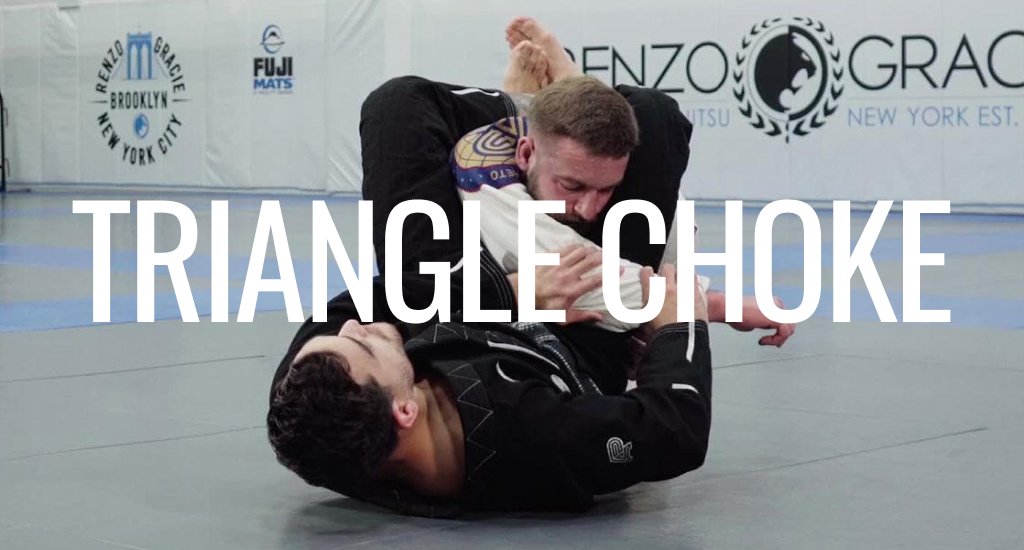
Table of Contents
What Is the Triangle Choke?
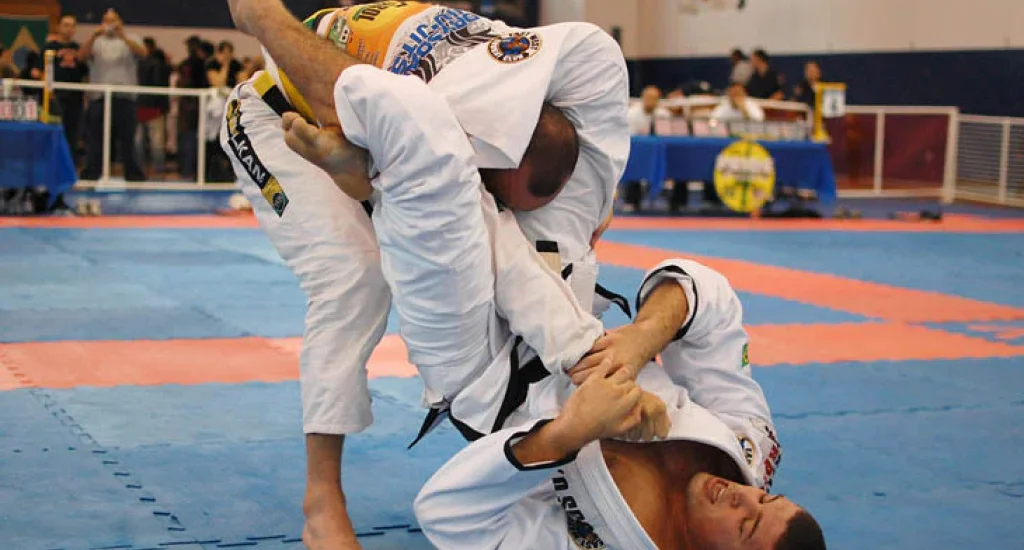
The triangle choke wraps your legs around your opponent’s neck, trapping one arm inside while leaving the other arm outside. Your legs form a figure-four shape—one leg crosses behind your opposite knee while that knee presses against their neck. This squeezes the arteries on both sides of the neck and cuts off blood flow to the brain.
When done right, this blood choke causes unconsciousness in 5-10 seconds. Most opponents tap right away when they realize they’re caught. Unlike air chokes that stop breathing, the triangle stops blood flow, making it faster and more effective.
The triangle works best from closed guard, so learning guard basics helps you understand this move better.
Triangle Choke History
The triangle choke started in early 1900s kosen judo in Japan. According to BJJ Heroes, Yaichibei Kanemitsu and his student Masaru Hayakawa first used it in a judo tournament in Kobe in November 1921 . The legendary Masahiko Kimura later helped develop modern triangle variations .
BJJ Heroes notes that BJJ practitioners used triangles from the start, but they didn’t work well at first . The problem was simple—they tried the move by itself instead of combining it with other attacks.
The big change came in the late 1970s and early 1980s. Grapplers training at Osvaldo Alves’ gym in Brazil created the modern closed guard system. They discovered that mixing triangles with armbar attacks made both techniques much more effective . This turned the triangle into one of BJJ’s best submissions.
Why the Triangle Choke Works
The triangle uses your strongest muscles (your legs) against your opponent’s weakest area (their neck). This gives you a huge advantage even against bigger, stronger people.
Why it’s so effective:
- Your legs are much stronger than their neck
- Their own trapped shoulder helps squeeze their neck
- Gravity helps when you’re on your back in guard
- Blood chokes work in seconds, not minutes
According to Infighting’s guide, triangles work from at least 17 different positions . You can hit them from closed guard, open guard, mount, back control, side control, and even during scrambles.
When your opponent defends the triangle, they often set up other attacks like armbars, omoplatas, sweeps, and kimuras. This creates attack chains where stopping one move leads right into another.
Step-by-Step Triangle Technique
The Figure-Four Lock
To lock the triangle correctly:
- Put one leg over your opponent’s back or shoulder
- Bring your other knee across the back of their neck
- Hook your first leg behind your opposite knee
- Don’t cross your ankles (common mistake that weakens the choke)
When you squeeze your knees together and pull their head down, the loop tightens and cuts off blood flow.
Angle Adjustment
Here’s the most important detail: you can’t finish triangles when you’re straight in front of your opponent.
How to angle correctly:
- Turn your body at least 90 degrees to the side
- Pull your knee close to your face
- Put your leg on the back of their neck, not the side
- Keep this angle the whole time
This angle puts pressure on the neck arteries while stopping them from stacking you or escaping.
Finishing the Triangle
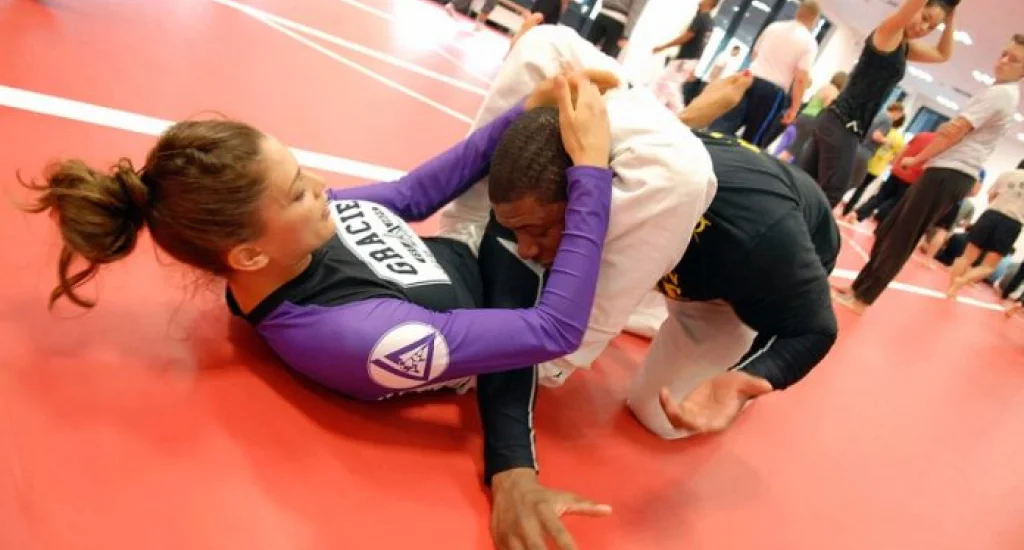
Control the head: Pull their head down to break their posture. Keep their head at your chest or hip.
Position your legs: Lock the triangle tight with your shin behind your knee. Point your locking leg’s knee toward their trapped shoulder. Squeeze your knees together.
Extend your hips: Push your hips forward and up into their neck. This creates maximum pressure on the arteries.
Triangle Setups from Closed Guard
Classic Inside Entry
The basic setup from closed guard:
- Pull your opponent forward to break their posture
- Wait for them to put one hand on the mat
- Grab their posted arm with an overhook
- Put your knee on the inside of their bicep
- Control their wrist on the posted arm
- Throw your other leg over their back
This works when opponents post their hands down to stay balanced.
Outside Entry
Use this when you have an overhook but they keep their hand away from you:
- Lock in a tight overhook on one arm
- Grab their other hand by the fingers
- Pull that hand under your guard
- Circle your free leg around the outside of their arm
- Throw your leg over their back
Kimura to Triangle
One of the best setups comes from a failed kimura attack:
- Try a kimura from closed guard
- When they defend by pulling their arm back
- Throw your leg over their far shoulder
- Switch right into the triangle
This shows how modern BJJ chains attacks together—when they defend one move, you attack with another.
Triangle Variations from Different Positions
Triangles work from many positions besides closed guard:
- Spider guard: Use your foot on their bicep when they don’t control your pants
- Butterfly guard: Chain sweep → armbar attempt → triangle
- Mount: Step your leg over their arm and head when they defend with arms too close
- Back control: Use instead of rear naked choke when they slide down
- Side control: Attack when you’ve controlled their near arm
Defending Triangle Attacks
Stacking defense: When they stand up and drive forward, turn your body 90+ degrees to the side and use their pressure against them.
Posture defense: Break their posture using collar grips, head control, overhooks, and off-balancing them.
Arm extraction: Lock the triangle fast, pull their head down, turn to the side, and switch to armbar if their arm comes free.
Slam defense (MMA): Fall to your guard when they stand up. Let go if they lift you too high.
Common Triangle Mistakes
Crossing ankles: This makes the choke weak and easy to escape.
Bad angle: Staying straight in front instead of turning 90 degrees to the side stops the choke from working.
Letting go too early: Opening the triangle before it’s locked lets them escape.
No head control: If they can sit up straight, there’s too much space for the choke to work.
Wrong leg position: Putting the side of your leg on their neck instead of the back gives them room to breathe.
Training Triangle Choke by Belt Level
White belts: Learn the basic closed guard triangle first. Focus on proper leg position (shin behind knee, not crossed ankles), turning 90 degrees to the side, and the triangle-to-armbar combo. See our white belt guide.
Blue/purple belts: Learn triangles from different positions. Study all the main setups, practice from spider guard, butterfly guard, and mount, and chain them with omoplatas and sweeps. Check out blue belt goals.
Brown/black belts: Perfect your angle cuts, study how top competitors set up triangles, learn how to beat all defenses, and create your own system. See our brown belt guide.
Triangle Choke in Competition
Triangles rank among the top submissions in BJJ tournaments. They work at all belt levels and weight classes.
- Gi competition: Grabbing the collar helps break their posture. The gi fabric helps hold the triangle tight. You can also attack collar chokes from triangle position.
- No-gi competition: Focus more on head control and underhooks. Moves happen faster because there’s less friction. You’ll use more guillotine variations.
- MMA fights: Triangles still work even when strikes are allowed. You control your opponent and stop them from hitting you. You can set them up right after getting taken down.
Triangle Choke for Self-Defense
The triangle is great for self-defense because:
- It works from guard (where real fights often end up)
- You control the attacker without having to punch or kick
- It works on bigger people when done right
- It works with or without clothing (jacket, shirt)
- Clear signal (they tap) that ends the fight
For those wondering is it hard to learn BJJ, the triangle shows BJJ’s learning curve—easy to understand but takes practice to do against someone who’s fighting back.
Conclusion
From 1920s Japanese judo to modern BJJ world championships and UFC fights, the triangle choke has worked for over 100 years. It combines efficiency, versatility, and the ability to chain attacks together, making it essential for effective grappling.
Whether you’re learning your first submissions or refining championship-level details, time spent on triangles pays off throughout your entire BJJ journey. For more information, check out our BJJ belt system guide and complete technique section.