
Guillotine Choke: Complete Technique Guide for BJJ
By BJJ Sportswear Editorial Team
Reviewed by competitive black belts specializing in front headlock systems | Last Updated: January 28, 2026
The guillotine choke is BJJ and MMA’s most versatile submission. It’s named after the medieval execution device. This choke works from standing, guard, half guard, mount, and many other positions. It’s one of the first submissions students learn. It stays effective at the highest competitive levels.
According to Evolve MMA’s guillotine analysis, this technique goes back to the earliest days of Brazilian Jiu-Jitsu. It’s typically one of the first chokes students learn. Yet it’s extremely effective at the highest levels of both BJJ and MMA.
NAGA Fighter emphasizes that doing this move well shows how agile a grappler is. This technique can transition to multiple attacks, guards, and submissions. The goal is to trap your opponent’s neck. You use your forearms and elbow to create a choking mechanism.
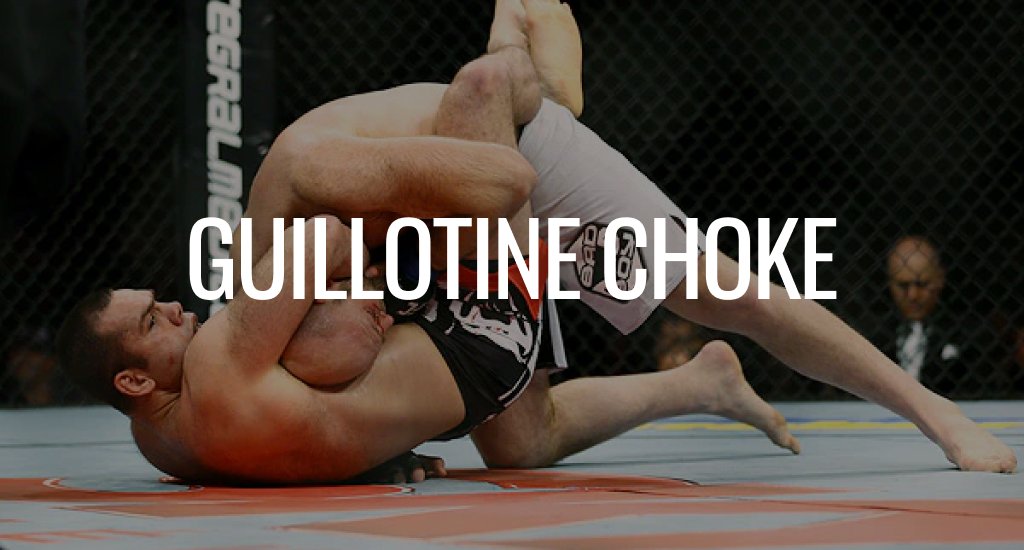
Table of Contents
What Is the Guillotine Choke?
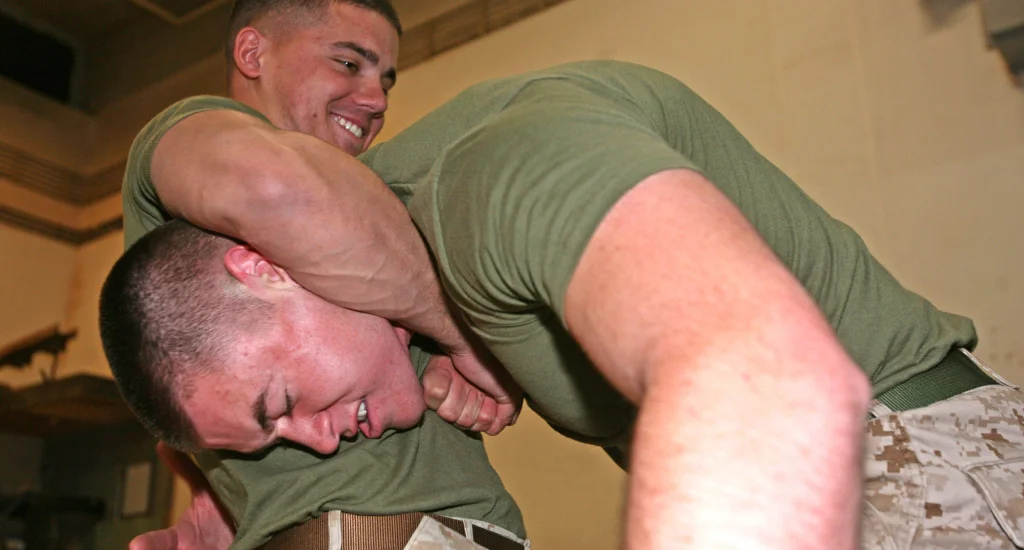
The guillotine choke puts your opponent’s head under your armpit. Your forearm goes under their neck. This creates pressure on the carotid arteries and windpipe. They must tap out.
Core mechanics:
- Trap their head under your armpit
- Put your forearm across their neck (under chin)
- Grab your wrist with your other hand
- Squeeze and lift to apply pressure
- Works as blood choke or air choke
- Usually does both at once
Evolve MMA notes that this choke works by pressing on the carotid arteries. This forces an opponent to tap out. It can also work as an air choke when your forearm presses against the windpipe. Most of the time, it does both.
This submission can work two ways. Blood chokes squeeze the carotid arteries. They cut oxygen to the brain. Air chokes block the airway. They cause shortness of breath. Most guillotines do both. This makes them very uncomfortable and effective.
Understanding what is guard in BJJ helps you see why this choke works so well from guard. You control their head while attacking.
Why the Guillotine Choke Works Everywhere
The guillotine choke works in every grappling situation. From standing, it stops takedown attempts. It becomes the wrestler’s biggest nightmare. It works for self-defense and in MMA. From guard positions, it works in closed guard (most common), half guard, butterfly guard, and open guard. From top, it appears during mount, side control, knee on belly, and north-south.
This submission works slightly better in no-gi. But it works the same in both gi and no-gi. No-gi grapplers favor it because there are no collar chokes. But it works just as well in gi when you set it up right.
The guillotine works from standing and guard. The rear naked choke needs back control. This front headlock attack is easier to set up during scrambles and takedowns. This makes it better for self-defense and MMA. Both finish fights well. But the guillotine appears more often in fast exchanges.
Evolve MMA emphasizes that this technique works great against wrestlers. They shoot for takedowns with their heads down. This makes it perfect for self-defense against untrained people. It defends against tackle attempts naturally.
Core Guillotine Choke Mechanics
NAGA Fighter emphasizes that proper arm placement makes the choke last longer. It stops your opponent from escaping.
Arm placement basics:
First, identify your choking arm. This goes under their chin. Your other arm is the grasping arm. Put your choking arm as high as you can. Don’t let it slip to hip level. Your forearm goes deep under their chin. Deep placement is key. Your free hand grabs your other wrist. This forms a triangle with your forearms. It squeezes their chest and neck. It puts weight and pressure on the windpipe area.
Body positioning:
NAGA Fighter teaches that body position makes this technique work better. For your upper body, line up your head with your spine. Keep your head close to them during the choke. Keep your spine straight. This gives you leverage and power. Don’t hunch your back. Push your chest forward slightly. Keep your shoulders relaxed. Engage your core for steady pressure.
For your lower body from guard, wrap your legs tight around their waist. Put your feet on their hips while pressing their head down. Cross your ankles. This locks the position. Use your legs to squeeze. This adds more pressure. Tuck your knees close to your chest. This stops them from escaping. Your upper and lower body must work together.
The finishing motion:
Bring your elbow to your hips. Squeeze tight. Lift up slightly. Pull them into the choke. Keep your grip pressure strong. Don’t crank it. Use steady pressure. The motion is like pulling something to your chest while squeezing.
Guillotine Choke from Closed Guard
The most common variation starts from closed guard. When they’re in your guard, pull their head down. Use a collar tie grip. This makes their head available.
Step-by-step:
- Get the head: Pull their head down with a collar tie. Keep them close.
- Wrap your arm: Wrap your choking arm around and under their neck. Get your arm as deep as you can. Your forearm goes under their chin.
- Lock the grip: Put your other arm under their arm. Grab your own wrist. Make a tight figure-four shape.
- Squeeze your elbow: Squeeze your elbow tight. This tightens the loop around their neck.
- Sit down (if standing): Bring them to the ground. Close your guard.
- Finish: Bring your elbow to your hips. Squeeze tight to finish.
White belts learn this variation first.
Key Guillotine Choke Variations
High-Elbow Guillotine (Marcelotine)
BJJ Fanatics describes that Marcelo Garcia made this version famous. You raise your choking elbow high. This gives you more leverage. It makes defense harder.
Key features: Your elbow goes above your shoulder. Both their arms stay out. No arm is trapped inside. This stops their shoulder pressure defense. It’s more aggressive than arm-in. You commit to finishing. You have fewer transitions. You get a better bite on the neck. Digitsu notes to keep your wrist on their throat. Put it in the best spot for pressure. Then lift your elbow up like you’re touching the ceiling.
Marcelo Garcia used this variation to submit many opponents at the highest levels.
Arm-In Guillotine Choke
This defensive version traps their arm inside the choke. Some call it “Renzo Trick” after Renzo Gracie. It uses a chinstrap grip to cup their chin. This makes it harder for them to escape. You need to adjust the angle just right. But you get more secure control. You have multiple transitions. You can switch to other submissions. It works when they defend the standard version.
Standing Guillotine Choke
When they shoot for a takedown, get a collar tie fast. Loop your free arm under their chin. Make sure the chinstrap grip is secure. Your forearm goes on their windpipe. Seal around their neck. Reddit discussion notes that you should angle your knees out. Stay on the balls of your feet. This helps your balance.
Standing versions are risky. But they work great when you do them right. They’re common in UFC and MMA. Fighters use them to defend wrestling takedowns.
10-Finger Guillotine
This wrestling-style version starts from sprawl. It counters the double-leg takedown. As you sprawl, weave your hands together. Grip their chin like you’re holding a football. Use your hips to drive pressure. Push their head down. Push their chin to their chest. Choke with all ten fingers locked. This is common in no-gi and wrestling-based grappling.
Guillotine Choke from Other Positions
From butterfly guard: When you try a butterfly sweep and they defend by basing, snap their neck down. Climb on top. Apply the submission. Move your hooks to half guard. Finish. Marcelo Garcia used this sequence a lot.
From mount: When you’re mounted and they turn to escape, slide your arm under their neck. Lock your grip. Finish from top. This is less common. But it works great when you get the chance.
During scrambles: This choke appears naturally during guard passes, failed takedowns, when their head gets exposed, and when you react quickly in chaos.
Guillotine to Triangle Choke Transition
If they defend by sitting up and pulling their head back, switch to a triangle choke. Let go of the grip. Throw your leg over their shoulder. Lock the triangle on the side where you had the underhook. This move from guillotine to triangle keeps constant pressure. Many competitors use this combo. Defending one opens the other.
Guillotine Choke Defense
Evolve MMA teaches to stay calm. Keep your body loose and relaxed.
Key defenses:
- Stay calm: Don’t panic. Panic makes it tighter. It stops you from thinking clearly.
- Arm over shoulder: Put your free arm over their shoulder as high as you can. Press your shoulder on their face. This takes tension off your neck. It buys you time.
- Press their leg: Take your other arm and press on their leg. Bend your elbow. This makes them very uncomfortable. It forces them to open their guard.
- Leg over and rotate: Put your leg over the leg you pressed. Slide your other leg out. Rotate your hips away from your head. They must let go of the choke.
Prevention tips:
The best defense is to stop it before it starts. Keep your head up. Don’t shoot with your head down. If caught, look up. Arch your back and look at the sky. Good posture stops them from getting your head. Hand fighting stops the first wrap. Understanding back control helps. Sometimes escaping means giving up your back.
Training Guillotine Choke by Belt Level
White belts should learn the closed guard version first. Perfect your arm placement. Learn to squeeze and lift right. Practice on partners who let you. This submission is safe when you practice right. Use controlled pressure. Always tap early when caught. Let go right away when your partner taps. Use steady pressure. Don’t jerk or crank. The choke cuts blood flow. But it causes no harm when released fast. Check first BJJ class expectations to understand how submissions progress.
Blue belts need to learn the high-elbow version. Study the arm-in variation. Practice standing versions. Learn it from many positions. Study Marcelo Garcia videos. See blue belt development goals for how to progress.
Purple and brown belts should perfect all major variations. Create invisible setups. Chain it with other moves like kimura and armbar. Master timing and angles. Adjust to how different people defend. Use it to control position, not just submit. Evolve MMA notes that this technique works as a position. It gives you control.
Black belts focus on building their signature game. Teach the mechanics well. Perfect competition timing. Create new setups. Teach proper defense.
Guillotine Choke in Competition and MMA
In IBJJF gi competition, this submission works great. It ends matches right away. It works from defensive spots. It’s legal at all belt levels. It creates constant threat. It makes opponents careful.
In ADCC and no-gi, it’s very effective. No-gi grapplers prefer it. It sets up faster without friction. It works in overtime. It creates scramble chances. Marcelo Garcia won many ADCC golds using this technique.
For MMA and UFC, this front headlock attack is very common. It stops takedowns well. It works from bottom. You can do it during striking. It ends fights fast. It appears in title fights across all promotions. This submission has finished more UFC fights than most others. Fighters like Charles Oliveira, Khabib Nurmagomedov, and Brian Ortega use it to win at the highest level.
Conclusion
From the early days of Brazilian Jiu-Jitsu to modern MMA, the guillotine choke is grappling’s most versatile submission. What makes it special isn’t complexity. It’s the simple idea of controlling the head and pressing on the neck. It works from almost any position.
Marcelo Garcia submitted many world champions with this technique. UFC fighters finish title fights with it. White belts learn it in their first month. This proves that basic techniques work at every level when you master them.
Whether you’re defending a street attack, competing in BJJ, or fighting in MMA, this is your most versatile finishing tool. Use it with butterfly guard, closed guard, and half guard. It completes your submission arsenal. Check our complete technique section and BJJ belt system guide for more.