

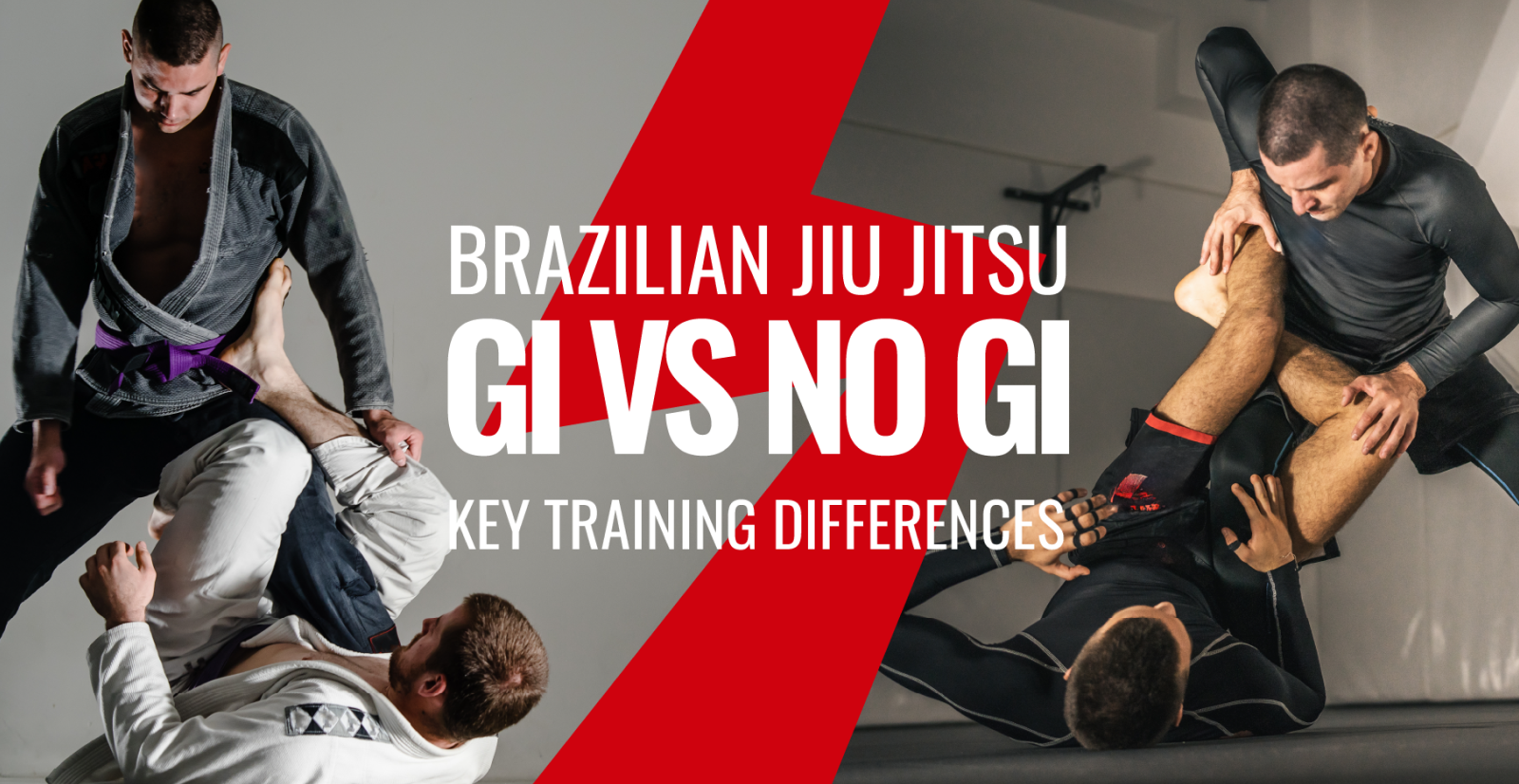
Gi vs No-Gi: Which BJJ Style is Better for You? (2026)
By BJJ Sportswear Editorial Team
Reviewed by black belt instructors experienced in both gi and no-gi | Last Updated: January 14, 2026
Gi BJJ uses the traditional kimono uniform allowing fabric grips for slower, more methodical, chess-like grappling that emphasizes technical precision, grip strength development, and defensive skills through collar chokes and sleeve controls, while no-gi BJJ uses rash guards and shorts for faster, more athletic, wrestling-based grappling that develops submission efficiency, cardiovascular conditioning, and scrambling ability through body control and dynamic transitions.
Evolve MMA explains: “Gi BJJ teaches you to always work on grips and stay technical in all positions, while no-gi BJJ teaches you to not be over-dependent on gi grips as they won’t be available all the time—it is not wrong to specialize in one style over the other if that’s what you like”. School of Jiu Jitsu clarifies: “Gi BJJ enhances grip and control skills promoting technical proficiency with more restrictive competition rules limiting leg attacks, while no-gi’s dynamic nature coupled with absence of clothing grips places greater emphasis on physical attributes like strength, speed, and explosiveness with more lenient rulesets permitting heel hooks and reaping”.
Most experts recommend training both styles because gi develops defensive awareness, posture control, and grip strength through complex control points, while no-gi sharpens offensive submission skills, positional fluidity, and wrestling takedowns, creating well-rounded grapplers who can adapt between different rulesets and competitive environments. Jiu Jitsu Brotherhood states: “Training both will improve your overall performance—gi training builds technical precision and defensive awareness while no-gi sharpens submission game and leg lock proficiency, with each style complementing the other and creating balanced, complete grapplers”.
This comprehensive guide covers key differences in equipment, pace, technique availability, competition rules, self-defense applications, MMA crossover, physical demands, costs, beginner recommendations for white belts starting BJJ classes, and how to structure training schedules to maximize benefits from both gi and no-gi throughout your BJJ journey.
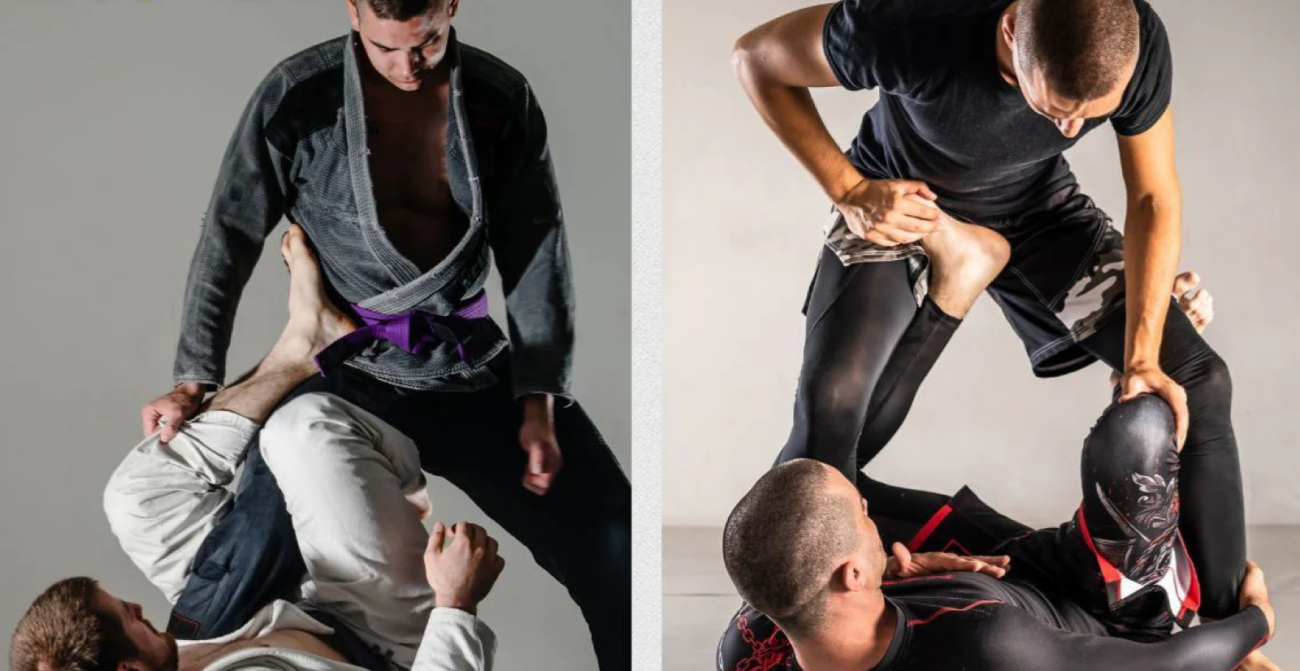
Table of Contents
Key Differences: Gi vs No-Gi
Equipment and Attire
Gi BJJ:
- Traditional kimono uniform (jacket, pants, belt)
- Choosing your first BJJ gi – buying guide
- Proper gi sizing essential
- Often worn with rash guard underneath for hygiene
- Belt indicates rank (white → black)
- How to tie BJJ belt
- Investment: $80-$120 for quality gi
- Requires proper washing after every use
No-Gi BJJ:
- Long-sleeve rash guard (mandatory at most gyms)
- Grappling shorts or spats
- No belt worn (rank displayed on rash guard stripes)
- Rash guard comparison guide
- Investment: $50-$100 for complete setup
- Faster drying, easier care
Equipment summary:
- Gi requires larger initial investment
- No-gi more convenient for travel/washing
- Both need essential BJJ gear (mouthguard, etc.)
Pace and Style
ONE FC explains: “Unlike gi BJJ, no-gi competitors are prohibited from gripping opponent’s clothing—as a result, no-gi BJJ is often much faster-paced with plenty of scrambles and rapid changes in position”.
Gi pace:
- Slower, more methodical
- Gi fabric creates friction, reduces speed
- Time to think and plan moves
- “Chess match” comparisons
- Patience rewarded
- Grips allow extended control
No-gi pace:
- Faster, more dynamic
- Sweat makes positions slippery
- Quick transitions required
- “Athletic scramble” comparison
- Explosiveness rewarded
- Constant movement necessary
Reddit practitioner notes: “Gi is like playing chess—you have time to think. No-gi is like speed chess—you have to react instantly”.
Gripping and Control
Gi gripping options:
- Collar grips (cross-collar, same-side)
- Sleeve grips (pistol, lasso, spider)
- Lapel grips (endless variations)
- Pant grips (cuff, knee line, belt)
- Allows multiple simultaneous control points
- BJJ vs Judo gi – different gi designs
No-gi gripping options:
- Wrist control
- Underhooks and overhooks
- Head control (collar ties)
- Body locks
- Ankle/leg controls
- Fewer simultaneous control points
- More wrestling-based
School of Jiu Jitsu notes: “Absence of extensive grips in no-gi results in more dynamic and fast-paced environment where athleticism and technique take precedence”.
Technique Availability
Gi-specific techniques:
- Cross collar chokes (standing, mounted)
- Bow and arrow choke
- Loop chokes
- Ezekiel chokes
- Lapel guards (worm guard, squid guard)
- Spider guard
- De La Riva guard
- Gi-based sweeps using sleeve/pant grips
No-gi emphasized techniques:
- Guillotine chokes
- Anaconda/D’Arce chokes
- Heel hooks (advanced)
- Knee bars (advanced)
- Ankle locks
- Wrestling-style takedowns
- Butterfly guard sweeps
Universal techniques (work in both):
Competition Rules
Gi competition restrictions (IBJJF):
- Heel hooks banned at all levels
- Knee reaping banned below brown belt
- Limited leg attacks for white/blue belts
- Strict gi specifications (color, patches, fit)
- Points system emphasizes position
- Slower pace generally
No-gi competition (ADCC, IBJJF No-Gi):
- School of Jiu Jitsu explains: “As of 2021, certain no-gi competitions permit heel hooks and reaping even at brown and black belt adult levels, creating more fluid, movement-centric environment”
- More lenient submission rules
- Leg locks permitted earlier (varies by organization)
- Less restrictive positional rules
- Faster pace encouraged
- Overtime rules often different
Competition culture:
- Gi competitions more traditional
- No-gi competitions more modern/progressive
- Both have world championships
- Different strategic approaches required
Benefits of Gi Training
Technical Precision and Defense
Jiu Jitsu Brotherhood explains: “Training in the gi enhances defensive skills—numerous grip-based control points and wider array of attacks force practitioners to become highly skilled in defense and develop sophisticated escape techniques”.
Gi develops:
- Superior defensive awareness – More submission threats = better defense
- Grip strength – Constant grip fighting builds forearms/hands
- Posture control – Maintaining structure against fabric grips
- Patience – Can’t muscle out of positions as easily
- Technical precision – Less reliance on athleticism
- Problem-solving – More complex positions to navigate
Long-term skill building:
- Forces beginners to learn proper technique
- Can’t rely solely on speed/strength
- Translates to improved no-gi game
- White belts benefit most from gi foundations
Expanded Technique Library
More submissions available:
- All no-gi submissions PLUS gi-specific chokes
- Lapel-based attacks (modern innovation)
- Sleeve/collar combinations
- Gi-based sweeps
Strategic depth:
- Grip fighting becomes its own game
- Multiple paths to same position
- Endless variation possibilities
- Lifetime to master
Self-Defense Relevance
Martial Journal argues: “Gi BJJ is more self-defense oriented—in real-world situations, attackers often wear jackets, hoodies, or clothing that can be used for control and submissions similar to gi training”.
Real-world clothing:
- Most people wear jackets, hoodies, coats
- Winter clothing especially gi-like
- Collar chokes work with shirt collars
- Sleeve controls applicable to jackets
Control without injury:
- Can restrain attacker using clothing
- Don’t have to hurt them to control
- Especially useful for security/bouncers
- Legal implications favor control over strikes
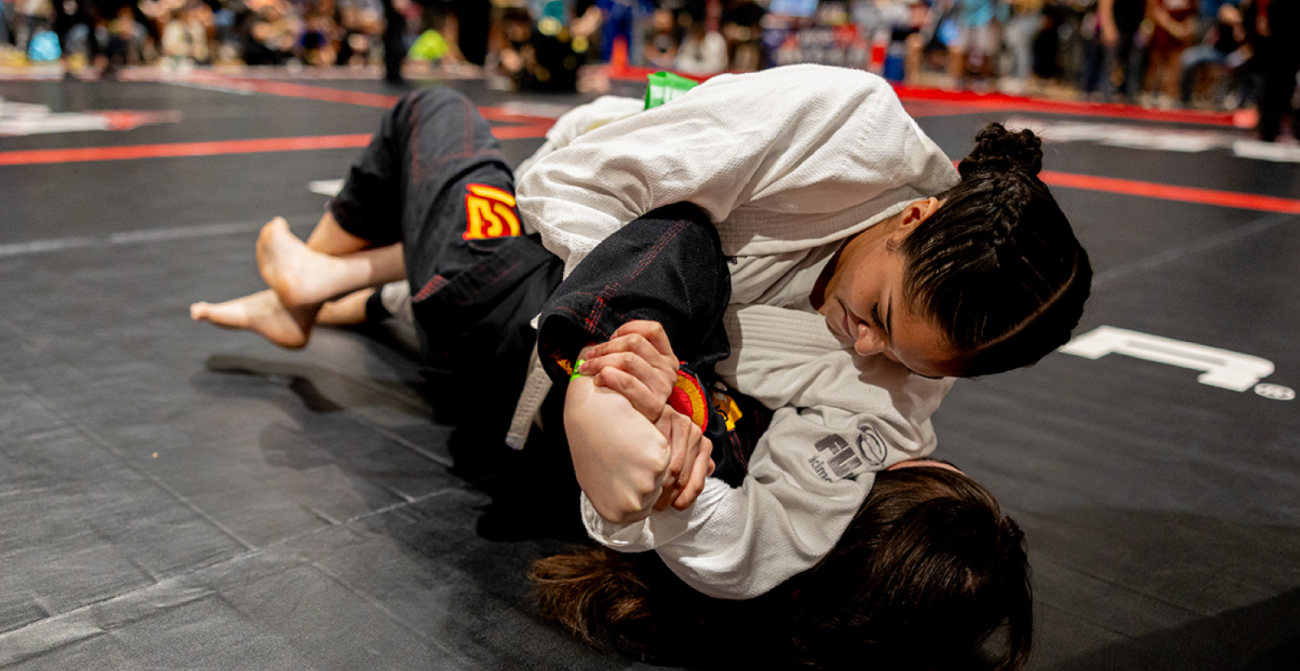
Benefits of No-Gi Training
Athletic Development and Conditioning
Raptor Jiu Jitsu lists benefits: “Speed and athleticism—without the gi’s friction, movement is faster, requiring quicker reactions and transitions, with improved wrestling and takedowns”.
No-gi develops:
- Cardiovascular endurance – Constant movement, scrambles
- Explosive power – Quick transitions required
- Speed and agility – Slippery positions demand fast reactions
- Strength application – More reliance on body control
- Wrestling skills – Takedowns, clinch work
- Adaptability – Positions change rapidly
Physical transformation:
- Burns more calories per session
- Builds functional athleticism
- Improves reaction time
- Will BJJ build muscle? – especially no-gi
Offensive Submission Skills
Jiu Jitsu Brotherhood notes: “No-gi enhances submission skills—lack of grips forces players to rapidly isolate and exploit attacking openings, resulting in more direct and aggressive approach”.
Sharper offense:
- Must finish submissions faster (can’t stall)
- Direct path to submission required
- Less time to think = better instincts
- Leg lock mastery developed
- Transitions between attacks fluid
Competition success:
- No-gi skills translate to gi (not always reverse)
- Modern leg lock game transfers
- Better at creating opportunities
- More aggressive mindset
MMA and Real-World Application
MMA crossover:
- No-gi is BJJ for MMA
- Techniques directly applicable
- Sweat mimics fight conditions
- No fabric to grab in cage
- Most MMA fighters train no-gi primarily
Street effectiveness:
- Works in summer clothing (t-shirts)
- Sweat factor more realistic
- Faster pace matches adrenaline
- Wrestling takedowns practical
- Leg locks end fights quickly
Career opportunities:
- Professional no-gi competitions growing
- ADCC world championships prestigious
- Submission-only promotions popular
- Martial Journal: “No-gi is practical for self-defense AND career advancement”
The Best Approach: Train Both
Complementary Skill Development
Evolve MMA recommends: “Specialize but train both—there are benefits to both training styles, and it’s not wrong to specialize in one over the other if that’s what you like”.
How they complement:
- Gi improves your no-gi defense (harder to escape gi submissions)
- No-gi improves your gi offense (sharper attack instincts)
- Gi builds grip strength (helps no-gi body control)
- No-gi builds conditioning (improves gi endurance)
- Together = complete grappler
Well-rounded skillset:
- Can compete in any ruleset
- Adapt to different training partners
- More options in every position
- Faster progression overall
- Mental flexibility
Recommended Training Split
For beginners (white belts):
- 70-80% gi, 20-30% no-gi
- Gi builds better fundamentals
- Slower pace easier for learning
- More time to understand positions
- Transition to more no-gi at blue belt
For intermediate (blue/purple belts):
- 50-50 split or 60-40 (gi-heavy or no-gi-heavy)
- Depends on competition goals
- Both styles equally important
- Experiment to find preference
For advanced (brown/black belts):
- Specialize based on goals
- MMA fighters: 80% no-gi
- IBJJF competitors: 80% gi
- Hobbyists: personal preference
- Most still train both at some level
Weekly schedule example (4 sessions):
- Monday: Gi fundamentals
- Tuesday: No-gi technique
- Thursday: Gi sparring
- Friday: No-gi open mat
Which Should YOU Choose?
Choose Gi-Focused Training If:
Your goals:
- Learn traditional Brazilian Jiu Jitsu
- Compete in IBJJF tournaments
- Prefer technical, methodical style
- Value self-defense with clothing grips
- Want to progress through belt system
Your personality:
- Patient, strategic thinker
- Enjoy complex problem-solving
- Don’t mind slower pace
- Like grip-based chess matches
- Respect tradition
Your situation:
- Gym primarily offers gi classes
- Training partners prefer gi
- Budget allows gi investment
- Have laundry routine for gi washing
Choose No-Gi-Focused Training If:
Your goals:
- Train for MMA competition
- Compete in ADCC/submission-only
- Prefer fast, athletic style
- Learn modern leg lock game
- Crossover to wrestling
Your personality:
- High-energy, aggressive
- Enjoy fast pace and scrambles
- Like athletic challenges
- Embrace modern evolution
- Less concerned with tradition
Your situation:
- Gym offers primarily no-gi
- Training in warm climate (lighter gear)
- Limited budget (cheaper equipment)
- Travel frequently (easier to pack rash guards)
The Beginner Recommendation
Start with gi for first 6-12 months:
- Better for learning fundamentals
- Slower pace aids understanding
- White belt curriculum usually gi-based
- Traditional progression respected
- Can always add no-gi later
Add no-gi after blue belt:
- Fundamentals solidified
- Can appreciate both styles
- Skills transfer bidirectionally
- More fun with variety
- Prevents burnout
Exception: If your primary goal is MMA, start no-gi immediately.
Cost Comparison
Initial Investment
Gi setup:
- Quality gi: $80-$120
- Rash guard (under gi): $30-$50
- Belt: Included with gi
- Total: $110-$170
No-gi setup:
- Rash guard: $30-$100
- Shorts/spats: $30-$60
- Total: $60-$160
No-gi slightly cheaper initially
Long-Term Costs
Gi training:
- Need 2-3 gis for rotation: $240-$360
- Washing supplies (vinegar, etc.): $5/month
- Replacement every 2-3 years: $100/year
- Annual cost: ~$100-$150
No-gi training:
- Need 3-4 rash guards: $120-$400
- Shorts last longer: $60-$120
- Replacement yearly: $80-$120/year
- Annual cost: ~$80-$120
Long-term costs roughly equivalent
Common Misconceptions
“Gi isn’t realistic for street fighting”
Truth: Most real-world encounters involve clothing. Gi training teaches how to control someone using their jacket, hoodie, or coat—very applicable.
“No-gi is just for MMA fighters”
Truth: No-gi develops well-rounded grapplers. Many pure BJJ competitors excel in no-gi without MMA aspirations.
“You have to choose one or the other”
Truth: Best grapplers train both. They complement each other and make you more complete.
“Gi is old-school and outdated”
Truth: Gi BJJ continues evolving with modern lapel guards and techniques. It’s not static.
“No-gi doesn’t build technique”
Truth: No-gi requires excellent technique because you can’t rely on grips to stall. Forces efficiency.
Frequently Asked Questions
Is gi or no-gi better for self-defense?
Both gi and no-gi BJJ are effective for self-defense but in different contexts—gi training teaches control using an attacker’s clothing (jacket, hoodie, coat) which most people wear outdoors, while no-gi prepares for summer clothing scenarios (t-shirts) and situations involving sweat that make grips slippery. Martial Journal concludes: “Gi BJJ is more self-defense oriented for most real-world situations involving clothing, but no-gi is also practical for self-defense especially in warm weather or indoor environments”. The most comprehensive self-defense preparation combines both styles—gi develops control and restraint options using fabric grips, while no-gi develops speed, takedowns, and quick submission finishes. Reference: What is BJJ? explains BJJ’s self-defense origins, and most experts recommend training primarily gi as a white belt for fundamental development, then adding no-gi training after establishing solid basics.
Can I train no-gi without training gi?
Yes, you can train exclusively no-gi and become highly skilled, especially if your goal is MMA or modern submission grappling competitions like ADCC, though many instructors recommend learning fundamentals in gi first because the slower pace aids beginner comprehension of positions and techniques. Evolve MMA states: “It is not wrong to specialize in one style over the other if that’s what you like”. No-gi-only practitioners can achieve black belt rank through dedicated training, though the path may take longer without gi’s technical foundations. Many successful MMA fighters train primarily or exclusively no-gi. However, most BJJ academies emphasize gi training for beginners because it builds better defensive habits and technical precision that transfers to no-gi. If you train no-gi only, ensure your gym offers comprehensive no-gi curriculum with experienced no-gi instructors.
Does no-gi training improve my gi game?
Yes, no-gi training significantly improves your gi game by sharpening offensive submission skills, developing faster transitions, building superior conditioning, and forcing you to maintain control without relying on fabric grips. Jiu Jitsu Brotherhood explains: “If your attacks and submission game is on point no-gi, this will carry over and enhance your gi submission game greatly when suddenly a wide array of grips and control points are available”. No-gi forces more aggressive, direct submission attempts because you can’t stall with grips, developing instincts that make you more dangerous in gi. The improved cardiovascular conditioning from no-gi’s faster pace also helps during guard passing and extended gi sparring rounds. However, gi training improves your no-gi defense even more dramatically—escaping gi submissions with their multiple control points makes escaping no-gi submissions relatively easier. Reference: Training both creates well-rounded grapplers, with most blue belts and above incorporating 30-50% no-gi into their weekly training schedule.
The Bottom Line: Gi or No-Gi?
For most practitioners: Train BOTH
- Start gi-focused as white belt (70-80%)
- Add no-gi after 6-12 months (30-50%)
- Let goals determine specialization at blue belt and beyond
- Become complete, well-rounded grappler
Gi strengths:
- ✅ Technical precision
- ✅ Defensive skills
- ✅ Grip strength
- ✅ Traditional progression
- ✅ Self-defense with clothing
No-gi strengths:
- ✅ Athletic development
- ✅ Offensive sharpness
- ✅ Modern leg locks
- ✅ MMA application
- ✅ Fast-paced excitement
Neither is “better”—they’re different and complementary.
Related resources:
- What is BJJ? – Understanding the art
- BJJ Classes – What to expect
- Choosing First Gi – Gi buying guide
- Rash Guard Comparison – No-gi gear
- Essential BJJ Gear – Complete equipment
- BJJ Belt System – Progression path
Start your journey. Try both. Find your style. 🥋💪
How We Reviewed This Article
Editorial Standards: Input from black belts with 10+ years in both gi and no-gi, competition analysis across IBJJF and ADCC rulesets, beginner progression studies, and practitioner surveys on training preferences.
Sources Referenced:
- Evolve MMA (gi vs no-gi comparison)
- School of Jiu Jitsu (key distinctions and rulesets)
- Jiu Jitsu Brotherhood (training both styles benefits)
- ONE FC (pace and style differences)
- Martial Journal (practical applications)
- Reddit r/bjj (community perspectives)
- Raptor Jiu Jitsu (benefits of both styles)
Last Updated: January 14, 2026