

Jujutsu vs Brazilian Jiu Jitsu: Complete Comparison (2026)
By BJJ Sportswear Editorial Team
Reviewed by black belt instructors and traditional martial arts historians | Last Updated: January 14, 2026
Japanese Jujutsu and Brazilian Jiu-Jitsu share ancestral roots but diverged dramatically in philosophy and application, with traditional Jujutsu developing as a comprehensive battlefield combat system in feudal Japan (1532+) incorporating strikes, joint locks, throws, and weapon defenses designed for armored samurai facing multiple attackers, while Brazilian Jiu-Jitsu evolved in the 1920s as a specialized ground-fighting sport emphasizing leverage-based submissions and positional control in one-on-one unarmed scenarios with live sparring constituting the core training methodology.
Elite Sports explains the fundamental divergence: “BJJ is all about getting the opponent to the ground without causing them harm, and when you get your opponent to the ground you become safe from getting throws and fatal strikes from them—however in Japanese Jujutsu each technique is aimed at handling different opponents at a time even if there is only one opponent on the mats, because back control on a battlefield would only leave you more vulnerable to multiple attackers”.
Century Martial Arts clarifies: “These arts are sometimes confused, at least in name, but are very different—Jujutsu evolved over centuries in Japan as a complete fighting system, while Brazilian jiu-jitsu was specifically refined for ground fighting and sport competition in the 20th century”.
The key differences manifest across training methodology (traditional Jujutsu emphasizes kata/pre-arranged forms with controlled drilling versus BJJ’s live rolling from day one), technical focus (Jujutsu’s 80% standing techniques including strikes/throws versus BJJ’s 80% ground fighting with submission specialization), philosophical goals (Jujutsu’s battlefield effectiveness against multiple armed opponents versus BJJ’s sport competition and one-on-one self-defense), pressure-testing culture (Jujutsu’s limited live sparring versus BJJ’s mandatory full-resistance rolling every class), and practical effectiveness (Jujutsu’s broader but shallower skillset versus BJJ’s narrow but deeper ground-fighting expertise).
This comprehensive comparison examines the historical origins of both arts, breaks down technical and philosophical differences, analyzes training methodologies and effectiveness for self-defense and competition, addresses which martial art suits different goals and body types, and provides evidence-based recommendations for beginners choosing between traditional Jujutsu and Brazilian Jiu-Jitsu in 2026.
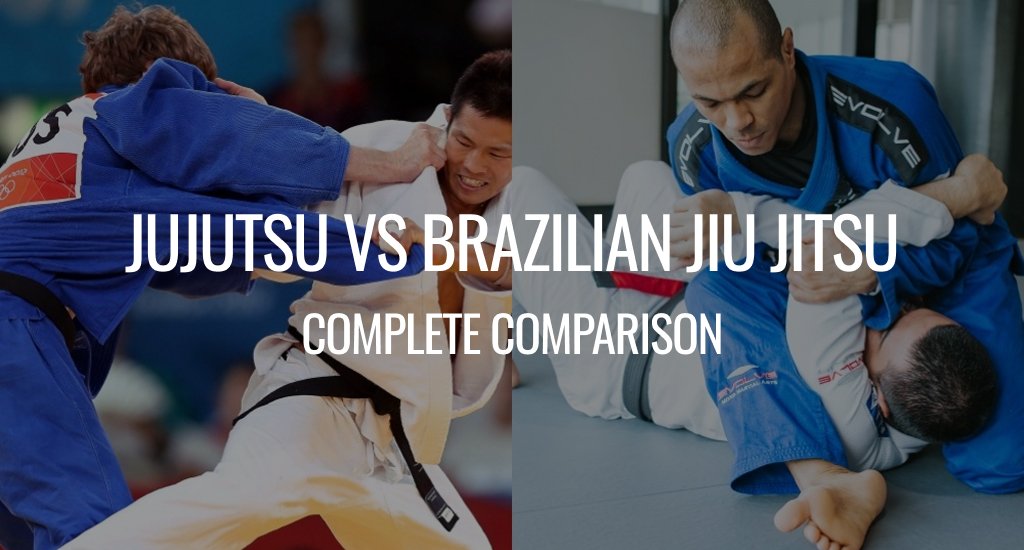
Table of Contents
Historical Origins: From Samurai Battlefield to Modern Sport
Japanese Jujutsu: The Ancient Warrior Art
United Society of JuJitsu on origins: “Jujutsu first began during the Sengoku period of the Muromachi period in 1532 and was founded by Takenouchi Hisamori, a military tactician and lord from Mimasaka Province—Takenouchi combined various Japanese martial arts which were used on the battlefield for close combat in situations where weapons were ineffective”.
Historical context:
- Period: Feudal Japan (1532+)
- Purpose: Battlefield combat for samurai warriors
- Environment: Armed opponents, armor, multiple attackers
- Goal: Survival and defeating enemies in war
Why Jujutsu developed this way:
- Samurai carried weapons (swords, spears)
- Armor made punching ineffective
- Grappling needed when weapons lost/broken
- Must handle multiple opponents (battlefield reality)
- Strikes targeted vital areas/pressure points through armor gaps
Traditional techniques included:
- Joint locks and breaks (disable quickly)
- Throws and takedowns (off-balance armored opponent)
- Strikes to pressure points (armor gaps)
- Weapon disarms and defenses
- Kata (pre-arranged forms) for teaching
- Standing techniques dominant (ground = death on battlefield)
Zenyo Jiu Jitsu on history: “Jiu Jitsu is thought to have started in Japan around the first century, growing more prominent by 1460, with the earliest recorded use of the word ‘Jiu-Jitsu’ in 1532 when Hisamori Tenenuchi officially established the first school of Jiu-Jitsu in Japan”.
Key historical figure: Jigoro Kano (1882):
- Studied traditional Jujutsu extensively
- Adapted techniques into Judo (“the gentle way”)
- Founded Kodokan in Tokyo
- Emphasized sport/education over combat
- Judo became largest martial art globally
- Reference: Understanding BJJ vs Judo connection
Brazilian Jiu-Jitsu: The Modern Evolution
BJJ origins:
- Period: 1920s Brazil
- Founder: Mitsuyo Maeda (Japanese judoka)
- Students: Carlos and Helio Gracie
- Purpose: Sport competition and self-defense (unarmed)
- Environment: One-on-one, no weapons, no armor
How BJJ diverged from Jujutsu:
Maeda taught Judo/Jujutsu to Gracies:
- Focus on ground fighting (Judo newaza)
- De-emphasized strikes (sport rules)
- Adapted for smaller practitioners (Helio was small/weak)
- Tested in challenge matches (vale tudo)
- Evolved through live sparring (pressure testing)
Helio Gracie’s modifications:
- Removed techniques requiring strength
- Emphasized leverage and timing
- Developed guard position (revolutionary)
- Created submission chains
- Proved effectiveness in real fights
UFC impact (1993+):
- Royce Gracie dominated UFC 1-4
- Proved ground fighting effectiveness
- BJJ exploded globally
- Sport competition standardized (IBJJF)
- Modern BJJ = sport-focused evolution
Reference: Complete BJJ history from Gracie family
Timeline comparison:
| Art | Origins | Age | Evolution |
|---|---|---|---|
| Jujutsu | 1532+ Japan | 490+ years | Battlefield → Traditional |
| BJJ | 1920s Brazil | ~100 years | Sport → Competition |
Technical Differences: Standing vs. Ground
Jujutsu: Comprehensive Standing System
Elite Sports on Jujutsu techniques: “In comparison to BJJ, Japanese jujutsu has a broader variety of techniques that are taught to students to take down the opponent, either by using strikes, takedowns, or by placing chokes and joint locks”.
Technical breakdown (approximate %):
- Strikes: 30-40% (punches, kicks, elbow, knees)
- Throws: 20-30% (similar to Judo)
- Standing joint locks: 15-20%
- Ground techniques: 10-20% (limited)
- Weapon defense: 10-15%
Jujutsu philosophy:
- Stay on feet (ground = vulnerable to multiple attackers)
- Finish quickly (disable and escape)
- Versatile toolkit (adapt to any scenario)
- Pressure points (small targets through armor)
- Traditional forms (kata-based learning)
Example Jujutsu curriculum:
- Striking fundamentals
- Breakfalls and rolling
- Standing joint locks (wrist locks, arm locks)
- Hip throws and trips
- Weapon defenses (knife, stick)
- Kata practice
- Limited ground work
- Multiple attacker scenarios
Strengths:
- Comprehensive skill set
- Effective standing game
- Striking ability
- Weapon awareness
- Traditional discipline
Weaknesses:
- Jack-of-all-trades, master of none
- Limited ground fighting
- Less pressure-tested
- Techniques require precision
- Difficult to learn effectively
BJJ: Specialized Ground Dominance
Impulse Martial Arts on BJJ focus: “BJJ places a heavy emphasis on ground fighting, with the majority of techniques focused on controlling opponents and submitting them on the ground—practitioners learn to maneuver, pass guard, and apply submissions from various ground positions”.
Technical breakdown (approximate %):
- Ground fighting: 80-85% (positions, submissions, escapes)
- Takedowns: 10-15% (basic wrestling/judo)
- Standing techniques: 5-10% (minimal)
- Strikes: 0% (pure grappling)
BJJ philosophy:
- Take fight to ground (your domain)
- Control position before submission
- Use leverage, not strength
- Exhaust opponent safely
- Can control without injury (legal/ethical)
Example BJJ curriculum:
- Shrimping and movement drills
- Mount escapes and control
- Guard fundamentals (closed, open)
- Passing guard techniques
- Back control and rear naked choke
- Triangle, armbar, kimura
- Takedowns (basic)
- Live rolling (sparring)
Strengths:
- Unmatched ground fighting
- Leverage-based (size neutralizer)
- Fully pressure-tested
- Sport competition structure
- Proven effectiveness (MMA, self-defense)
Weaknesses:
- Limited standing skills
- No striking defense
- Vulnerable to multiple attackers
- Sport habits (pulling guard on concrete)
- Neglects weapon threats
Side-by-Side Technical Comparison
| Aspect | Jujutsu | BJJ |
|---|---|---|
| Primary Range | Standing (60-70%) | Ground (80-85%) |
| Strikes | Yes (punches, kicks, elbows) | No (pure grappling) |
| Throws | Heavy emphasis (Judo-like) | Basic only |
| Ground Fighting | Limited (10-20%) | Specialized (80%+) |
| Submissions | Some (less refined) | Extensive (15+ core) |
| Weapons | Defense training | None |
| Multiple Attackers | Designed for | Vulnerable |
| Armor Consideration | Historical yes | No (modern) |
Training Methodology: Forms vs. Live Sparring
Jujutsu: Traditional Kata-Based Learning
GBJJ on Jujutsu training: “Traditional Japanese Jiu Jitsu focuses more on technical training through pre-arranged drills and controlled sparring—in JJJ dojos techniques are practiced repetitively with an emphasis on precise execution rather than intense live sparring, and this method allows students to learn and understand various techniques in a controlled environment before gradually applying them with more resistance”.
Typical Jujutsu class structure:
1. Warmup (10-15 min):
- Stretching and conditioning
- Breakfall practice (ukemi)
- Basic movements
2. Kata practice (30-40 min):
- Partner demonstrations (tori and uke)
- Pre-arranged sequences
- Techniques practiced with cooperation
- Focus on form and precision
- Repetition until muscle memory
3. Controlled drilling (15-20 min):
- Techniques with progressive resistance
- Partner provides realistic but safe resistance
- Instructor supervises closely
- Emphasis on safety and control
4. Limited live sparring (0-15 min):
- Some schools include randori (free practice)
- Others avoid it entirely
- When included, often restricted
- Lower intensity than BJJ rolling
Advantages of kata training:
- Learn complex techniques safely
- Develop precise execution
- Understand principles deeply
- Respectful traditional culture
- Lower injury risk
Disadvantages of kata training:
- Techniques untested under pressure
- Cooperative partner (not realistic)
- Slower skill development
- Gap between drilling and reality
- “Will this actually work?” uncertainty
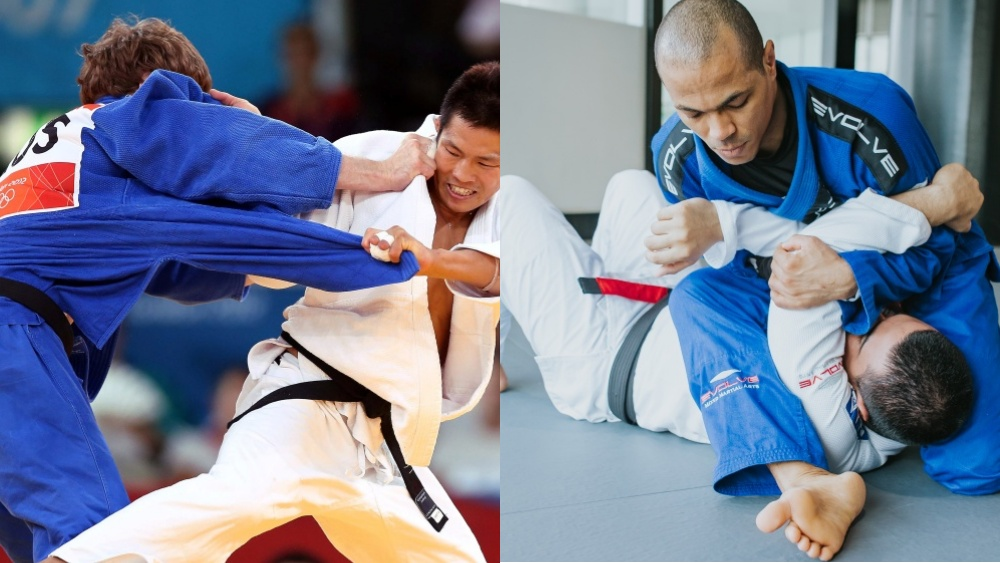
BJJ: Live Rolling from Day One
GBJJ on BJJ training: “The difference in training approaches can be attributed to the historical development and philosophies of these martial arts—BJJ evolved from JJJ but was further refined and adapted for modern combat, particularly in the context of no-holds-barred competitions, thus the emphasis on live sparring and a realistic training environment became paramount in BJJ dojos”.
Typical BJJ class structure:
1. Warmup (10-15 min):
- Shrimping, bridging, movement drills
- Technical stand-up
- Conditioning
2. Technique instruction (20-30 min):
- Instructor demonstrates 2-4 techniques
- Students drill with partner
- Repetition with coaching
- Questions and refinement
3. Positional sparring (10-15 min):
- Start in specific position (mount, guard, etc.)
- Live resistance
- Reset and repeat
- Develops specific position skills
4. Live rolling (20-30 min):
- Full resistance sparring
- 5-6 minute rounds
- Multiple partners
- 100% effort allowed
- Tapping when caught (safety)
Reference: Understanding BJJ class structure
Why live rolling matters:
Immediate feedback:
- Technique works or it doesn’t
- Can’t fake skill in rolling
- Pressure reveals weaknesses
- Forces adaptation and problem-solving
Realistic preparation:
- Practiced against full resistance
- Comfortable with physical confrontation
- Know what works under stress
- Proven in competition and MMA
Accelerated learning:
- Trial and error in real-time
- Faster skill development than drilling alone
- Mental game developed (composure under pressure)
- Competition-ready training
Disadvantages:
- Higher injury risk (submissions, joint stress)
- Can be intimidating for beginners
- Ego can interfere (refusing to tap)
- Physical and mental exhaustion
Training Culture Comparison
| Aspect | Jujutsu | BJJ |
|---|---|---|
| Live Sparring | Limited/optional | Mandatory every class |
| Resistance Level | Progressive, controlled | Full resistance |
| Injury Risk | Lower (controlled) | Higher (submissions) |
| Skill Testing | Kata/demo-based | Rolling performance |
| Learning Speed | Slower (safety priority) | Faster (pressure testing) |
| Beginner Experience | Less intimidating | Can be overwhelming |
| Traditional Culture | High (bowing, formality) | Moderate (relaxed) |
| Competition Focus | Limited | Heavy (IBJJF, etc.) |
Self-Defense Effectiveness: Which Works Better?
For One-on-One Unarmed Confrontations
Winner: BJJ (decisively)
Why BJJ dominates 1v1:
HotBot on BJJ effectiveness: “The fundamental principles and techniques in Brazilian Jiu-Jitsu center on the concepts of leverage, control, and the capacity to submit an opponent through a variety of grappling techniques—practitioners of BJJ place a strong emphasis on ground fighting and submission methods, and this approach promotes a distinctive philosophy asserting that individuals, regardless of size or strength, can effectively defend themselves”.
BJJ advantages:
- 73-90% of fights go to ground (BJJ domain)
- Pressure-tested techniques (work under stress)
- Size neutralization (leverage > strength)
- Can control without injury (legal safety)
- Competition and MMA proven
- Live sparring = realistic preparation
- Reference: Complete BJJ self-defense analysis
Scenario: Untrained attacker:
- BJJ practitioner clinches safely
- Takes to ground (attacker helpless)
- Achieves dominant position (mount/back)
- Applies choke (attacker unconscious in 5-10 seconds)
- Total control, minimal injury
Jujutsu limitations in 1v1:
- Techniques require precision (difficult under stress)
- Limited pressure testing (uncertainty)
- Striking less effective than specialized strikers
- Ground game inadequate vs BJJ/wrestlers
- Kata-based training doesn’t translate
For Multiple Attacker Scenarios
Winner: Jujutsu (slightly), but both inadequate
Why Jujutsu has advantage:
- Designed for multiple opponents (battlefield origin)
- Striking creates distance/damage
- Standing mobility (can run/evade)
- Quick disable techniques (move to next threat)
- Awareness training (scanning environment)
Elite Sports on multiple attackers: “In Japanese Jujutsu each technique is aimed at handling different opponents at a time even if there is only one opponent on the mats—for example, if you imagine the use of back control on a battlefield, it will only leave you more vulnerable to multiple attackers”.
Why BJJ is dangerous vs multiple:
- Ground fighting = stationary (can’t flee)
- Controlling one = exposed to others
- No striking defense
- Sport habits (pulling guard suicidal)
- Getting stomped while grappling = severe injury/death
Reality: Neither art solves multiple attackers
- Best self-defense vs multiple = RUN
- Awareness and avoidance > technique
- If forced to fight: Strike and escape (don’t grapple)
- Consider Krav Maga or reality-based training
For Weapon Defense
Winner: Jujutsu (limited), but both insufficient
Jujutsu includes:
- Knife defense techniques
- Stick/club defenses
- Disarm training
- Distance management
But reality:
- Most martial arts weapon defenses are unrealistic
- Compliance-based demonstrations don’t work
- Expect to get cut/hit even with training
- Best weapon defense = run or comply
BJJ approach:
- Zero weapon training in most schools
- Close distance = gets you stabbed
- Ground fighting vs knife = suicidal
- Sport focus ignores weapons entirely
Honest assessment:
- Weapons fundamentally change combat
- No martial art makes you knife-proof
- Jujutsu at least addresses it (better than nothing)
- BJJ completely unprepared
Overall Self-Defense Verdict
For realistic self-defense needs:
Choose BJJ if:
- Primarily concerned with common unarmed attacks
- Want size neutralization (smaller person)
- Value pressure-tested techniques
- Willing to train live sparring
- One-on-one scenarios most likely
Choose Jujutsu if:
- Want comprehensive striking + grappling
- Value traditional martial arts culture
- Concerned about weapons/multiple attackers
- Prefer lower intensity training
- Traditional discipline appeals
Best option: Cross-train
- BJJ for ground fighting (3-4x weekly)
- Boxing for striking (1-2x weekly)
- Awareness training for tactics
- = Complete self-defense skillset
Which Should You Choose? Decision Framework
Choose BJJ If You Want:
Sport competition:
- IBJJF tournaments globally
- ADCC (no-gi grappling)
- Local competitions monthly
- Clear ranking system (belt progression)
- Active competition scene
MMA preparation:
- Essential for mixed martial arts
- Ground fighting mandatory
- Pressure-tested techniques
- Reference: Many professional fighters train BJJ
Realistic training:
- Live sparring every class
- Immediate skill feedback
- Know techniques work
- Ego-checking humility
Size neutralization:
- Smaller practitioners can excel
- Leverage > strength
- Women especially benefit
- Technical over athletic
Modern community:
- Relaxed academy culture
- Social atmosphere
- Reference: Find academy via BJJ Near Me
Choose Jujutsu If You Want:
Traditional martial arts:
- Formal dojo culture
- Respect and discipline emphasis
- Belt ceremony significance
- Historical lineage connection
Comprehensive curriculum:
- Striking AND grappling
- Weapons training
- Multiple attacker scenarios
- Broader skill set
Lower intensity:
- Less aggressive sparring
- Controlled partner work
- Lower injury risk
- Gentler pace
Cultural immersion:
- Japanese martial arts tradition
- Meditation and philosophy
- Kata aesthetic beauty
- Traditional weapons (bo staff, etc.)
Discipline focus:
- Character building emphasis
- Respect and etiquette
- Mental development
- Traditional values
Age and Body Type Considerations
BJJ better for:
- Smaller individuals (leverage emphasis)
- Older beginners (can train into 60s-70s)
- Women (size neutralization proven)
- Athletic types (intense sparring)
- Competitive personalities
Jujutsu better for:
- Those avoiding intense contact
- Injury-prone individuals
- Seeking traditional structure
- Preferring forms/kata
- Cultural learners
Reference: Understanding starting age considerations
Time Commitment Comparison
BJJ progression:
- White belt: 1-2 years
- Blue belt: 2-4 years more
- Purple belt: 2-3 years more
- Brown belt: 2-3 years more
- Black belt: 8-12 years total
- Training: 3-5x weekly recommended
Jujutsu progression:
- Black belt: 5-10 years typically
- Training: 2-3x weekly typical
- Varies significantly by school
- Less standardized than BJJ
The Bottom Line: Jujutsu vs BJJ
Key differences summarized:
Jujutsu:
- ✅ Ancient (490+ years)
- ✅ Comprehensive (striking + grappling)
- ✅ Traditional culture
- ✅ Multiple attacker designed
- ✅ Weapon defense included
- ❌ Limited live sparring
- ❌ Techniques less pressure-tested
- ❌ Weaker ground game
- ❌ Slower skill development
BJJ:
- ✅ Modern (100 years)
- ✅ Specialized ground fighting
- ✅ Fully pressure-tested
- ✅ Size neutralization proven
- ✅ Active competition scene
- ✅ MMA/self-defense effective
- ❌ No striking training
- ❌ Vulnerable to multiple attackers
- ❌ No weapon defense
- ❌ Sport habits (pulling guard)
For self-defense:
- 1v1 unarmed: BJJ wins decisively
- Multiple attackers: Neither sufficient (run!)
- Weapons: Neither adequate (avoid/comply)
For sport:
- BJJ has robust competition infrastructure
- Jujutsu has limited competitive outlets
For fitness:
- BJJ more intense (live rolling)
- Jujutsu more moderate
For culture:
- Jujutsu more traditional/formal
- BJJ more relaxed/modern
Ultimate recommendation:
If choosing ONE art:
- BJJ for most people (realistic, effective, fun)
- Jujutsu for traditionalists (culture, comprehensive)
Ideal approach:
- BJJ as primary (3-4x weekly for ground mastery)
- Add boxing (1-2x weekly for striking)
- = Complete martial artist in 2-3 years
Both arts have value. Your choice depends on goals. 🥋
Related resources:
- What is BJJ? – Understanding Brazilian Jiu-Jitsu
- BJJ Belt System – Complete progression
- BJJ vs Judo – Related comparison
- BJJ vs Wrestling – Grappling styles
- Is BJJ Good for Self-Defense? – Complete analysis
- BJJ Near Me – Finding academy
Choose your path. Train consistently. Master your art. 💪
OSS! 🙏
How We Reviewed This Article
Editorial Standards: Historical martial arts research, training methodology analysis, self-defense effectiveness studies, competition data comparison, and practitioner surveys across both arts.
Sources Referenced:
- Century Martial Arts (fundamental differences)
- Elite Sports (technical comparison and requirements)
- HotBot (key principles and effectiveness)
- Japanese Martial Arts Center (Jujutsu training methodology)
- Grand Union BJJ (training approach comparison)
- United Society of JuJitsu (historical origins)
- Zenyo Jiu Jitsu (timeline and evolution)
- GBJJ (training culture comparison)
- Reddit r/jiujitsu (practitioner perspectives)
- Impulse Martial Arts (technical focus differences)
Last Updated: January 14, 2026