

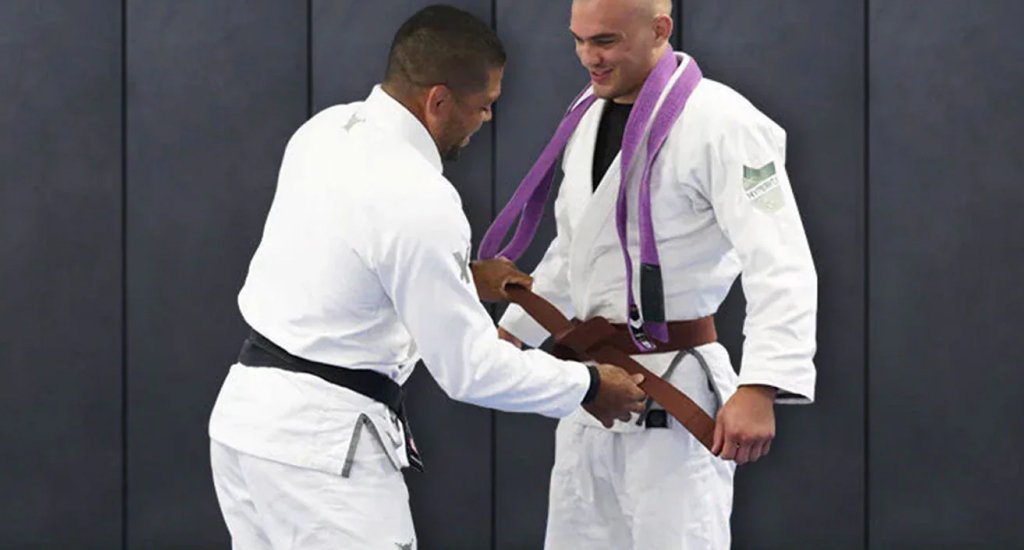
What Does It Mean to Be a BJJ Brown Belt? (Complete Guide)
By BJJ Sportswear Editorial Team
Reviewed by black belt instructors and competition coaches | Last Updated: January 14, 2026
A BJJ brown belt represents unconscious competence where techniques flow automatically without deliberate thought after 6-8+ years of training (typically 5-8 years total from white belt), signifying mastery of fundamental positions and transitions with the ability to execute high-level techniques against resisting opponents, earning recognition as “almost a black belt” with many instructors considering brown belts capable of teaching effectively and competing at elite levels.
BJJ Fanatics explains: “A brown belt in BJJ is akin to a seasoned sailor—you’ve weathered many storms and are well-versed in the art of submissions, escapes, and transitions, and the jiu jitsu brown belt is often seen as a mini black belt capable of executing high-level techniques with skill and precision, with Xande Ribeiro once saying that a brown belt could be awarded a black belt the very next day if the instructor felt so inclined”. InFighting explains the mindset: “Brown belt represents unconscious competence—you do what you know without thinking about it, contrasted with purple belt’s conscious competence where you know what to do, blue belt’s conscious incompetence where you know what you don’t know, and white belt’s unconscious incompetence where you don’t know what you don’t know”.
Brown belt requirements include IBJJF minimum standards of 18 years old minimum age, 18 months at purple belt minimum (though most spend 2-3 years), and 1 year minimum at brown before black belt eligibility, plus technical competency demonstrating complete game in all positions (guard, passing, top control, submissions, escapes), competition-tested skills under pressure, teaching ability to instruct intermediate students, refined personal style with signature techniques, strategic understanding beyond mechanical execution, and injury management wisdom accumulated from years of training.
Elite Sports details requirements: “To become a brown belt five to eight years of training and a minimum of 750 classes are required, and in addition to these many other factors play a role in your belt promotion including your competence, behavior, dedication, regularity, and the inclination of your instructor”. This comprehensive guide examines what brown belt truly means in the BJJ belt system, breaks down the journey from purple belt through brown belt’s technical and mental requirements, provides realistic timeline expectations for the final push to black belt, addresses the unique challenges of brown belt including perfectionism and instructor pressure, and offers strategic training approaches for brown belts preparing for the ultimate promotion.
Table of Contents
Understanding Brown Belt: The “Almost Black Belt”
What Brown Belt Represents
BJJ Blog on brown belt significance: “Based on the criteria outlined by the IBJJF an athlete must be at least 18 years old to receive a brown belt and must have spent at least 18 months at purple belt before being promoted, with practitioners typically spending 1-1.5 years at white belt, 2 years at blue belt, and up to 3 years at purple belt”.
The brown belt paradox:
- High enough: Can dominate most practitioners
- Not quite there: Still learning from black belts
- Trusted enough: Often teaching classes
- Not credentialed: Can’t award belts (most systems)
What makes brown belt unique:
- Last colored belt (next step is black)
- Long enough journey (6-8+ years total)
- Close enough to see (black belt within 1-3 years)
- Skilled enough to teach (instructor roles common)
- Experienced enough to know (realistic about gaps)
Brown belt is transition phase between student and master.
The Four Stages of Learning at Each Belt
White belt – Unconscious incompetence:
- “I don’t know what I don’t know”
- Everything is new and overwhelming
- Can’t recognize good technique from bad
- Unaware of dangers and opportunities
Blue belt – Conscious incompetence:
- “I know what I don’t know”
- Aware of skill gaps
- Recognizes mistakes after making them
- Frustrated by lack of execution
- Reference: Surviving blue belt blues
Purple belt – Conscious competence:
- “I know what to do”
- Can execute techniques when thinking about them
- Requires mental focus during rolling
- Deliberately choosing techniques
- Reference: Understanding purple belt journey
Brown belt – Unconscious competence:
- “I do what I know automatically”
- Techniques flow without deliberate thought
- Body responds instinctively
- Mental bandwidth for strategy, not execution
- This is mastery level
Example in action:
Purple belt triangle:
- Thinks: “Opponent posturing, I should go for triangle”
- Mentally reviews: “Angle off, control head, lock legs”
- Executes: Deliberate sequence
- Success: 60-70% of time
Brown belt triangle:
- No thinking: Body responds to posture automatically
- Seamless execution: Angle, control, lock flows
- Refinements: Micro-adjustments without conscious thought
- Success: 80-90% of time
This unconscious competence defines brown belt.
Brown Belt vs. Black Belt: The Remaining Gap
What brown belts have:
- Complete technical foundation
- Competitive against most practitioners
- Teaching ability for fundamentals
- Personal game fully developed
- 6-8+ years of experience
What separates from black belt:
- Refinement – Small percentage improvements
- Consistency – Execute under any conditions
- Teaching depth – Explain WHY, not just HOW
- Strategic mastery – See game 3-4 moves ahead
- Time – IBJJF minimum 1 year, typically 2-3 years
- Maturity – Emotional/mental leadership
Xande Ribeiro quote (from BJJ Fanatics):
- “Brown belt could be awarded black belt the very next day if instructor felt inclined”
- Shows how close brown is to black
- Also shows it’s instructor discretion
- Gap is smaller than white to blue, but critical
Brown Belt Requirements and Timeline
IBJJF Minimum Requirements
Age requirement:
- 18 years old minimum (no youth brown belts)
- Adult belt exclusively
- Recognizes maturity needed
Time requirement:
- 18 months at purple belt minimum (IBJJF rule)
- 1 year at brown belt minimum before black belt
- Most spend 2-3 years at each
- Total: 6-10 years from white belt
Elite Sports IBJJF requirements: “According to the International Brazilian Jiu Jitsu Federation the requirements for BJJ athletes to get the brown belt are: a BJJ practitioner should be at least 18 years old to get this belt and should have trained for at least 18 months under a previous belt, purple belt”.
Realistic Timeline from White to Brown
Average progression:
| Belt Level | Minimum Time | Typical Time | Training Frequency |
|---|---|---|---|
| White → Blue | 1 year | 1-2 years | 3-4x weekly |
| Blue → Purple | 2 years | 2-4 years | 3-4x weekly |
| Purple → Brown | 18 months | 2-3 years | 3-5x weekly |
| Total to Brown | 4.5 years | 6-8 years | Consistent |
Reddit brown belt timelines: Real practitioner experiences:
- “Started Summer of ’05, got brown July 2012” (7 years)
- “Started ’06, received brown beginning of ’15” (8.5 years)
- “Started ’08, promoted to brown summer this year” (7 years)
- “Purple to Brown: 2-4 years” (common range)
Factors affecting timeline:
Faster progression (5-6 years):
- Wrestling/Judo background
- Training 5-6x weekly consistently
- Competing regularly
- Athletic, younger (20s)
- Dedicated instructor attention
Slower progression (8-10 years):
- No prior grappling experience
- Training 2-3x weekly
- Injuries and breaks
- Older (40+), less athletic
- Hobbyist mindset
- Reference: Consistency matters more than talent
Class requirement:
- 750+ classes minimum (Elite Sports)
- At 3x weekly: ~5 years
- At 4x weekly: ~3.5 years
- Consistency is key
Technical Requirements
Elite Sports brown belt test requirements:
Complete game development:
1. Guard mastery (multiple systems):
- Closed guard attacks and sweeps
- Half guard deep understanding
- Butterfly guard offensive options
- Open guards (De La Riva, Spider, etc.)
- Can play multiple guards adaptively
2. Passing expertise:
- Pressure passing mastery
- Movement passing competency
- Leg drag variations
- Can pass any guard given time
3. Top control dominance:
- Mount maintenance and attacks
- Back control mastery
- Side control variations
- Transitions between positions seamless
4. Submission library:
- 15+ submissions from multiple positions
- Rear naked choke high percentage
- Triangle, armbar, kimura variations
- Leg locks (if academy teaches)
- Can chain submissions fluidly
5. Defense and escapes:
- Escape all positions reliably
- Submission defense instinctive
- Can survive against black belts
- Rarely caught in “stupid” submissions
6. Takedowns and standing:
- Double leg, single leg competency
- Throws or trips (judo influence)
- Takedown defense solid
- Comfortable standing phase
Brown belt can compete in all areas of the game.
Beyond Technique: Intangibles
What can’t be measured but matters:
1. Competition tested:
- Competed at multiple levels
- Tested under pressure
- Win/loss less important than courage
- Understands competition meta
2. Teaching ability:
- Can explain techniques clearly
- Helps lower belts improve
- Demonstrates well
- Understands progressions
3. Academy contribution:
- Positive culture influence
- Mentors lower belts
- Consistent attendance
- Leadership by example
4. Mat maturity:
- Controls ego during rolling
- Taps when caught (no stubbornness)
- Rolls safely with everyone
- Respected by training partners
5. Conceptual understanding:
- Explains WHY techniques work
- Sees principles across positions
- Can troubleshoot technique problems
- Strategic thinking developed
Brown belt is complete practitioner, not just technician.
The Brown Belt Journey: What to Expect
Year 1-2 at Brown Belt (Refinement Phase)
Mental shift:
- From “learning new things” to “perfecting old things”
- Small percentage improvements
- Frustrating slow progress (like blue belt again)
- “Am I still improving?” doubts
Training focus:
1. Polish signature techniques:
- Your best 5-10 techniques
- Make them work at elite level
- Remove inconsistencies
- Reference: Building on 5 blue belt goals
2. Address weaknesses:
- Positions you avoid
- Techniques that don’t work
- Bad habits from earlier belts
- Strategic gaps
3. Develop coaching ability:
- Start teaching if not already
- Explain concepts to lower belts
- Watch instructionals critically
- Prepare for black belt teaching role
4. Competition (if interested):
- Brown belt division competitive
- Tests skills under pressure
- Identifies remaining gaps
- Optional but valuable
The Brown Belt Plateau
The challenge:
- Progress feels invisible
- Black belts still dominate you
- Lower belts catching up
- “Stuck” feeling common
Why this happens:
- Diminishing returns (already skilled)
- Small refinements not obvious
- Comparison to black belts (unfair)
- Mental more than physical
How to navigate:
- Track video monthly (shows progress)
- Focus on specific technique goals
- Celebrate small wins
- Trust the process (worked before)
- Remember: Every black belt survived this
Brown belt plateau is like blue belt blues but higher level.
Social Dynamics at Brown Belt
Expectations from others:
Lower belts expect:
- Expert advice
- Teaching guidance
- Mentorship
- “Almost black belt” skill
Instructors expect:
- Leadership in academy
- Teaching assistance
- Mature behavior
- Representation of academy
Training partners expect:
- Safe, controlled rolling
- Generous with knowledge
- Ego-free training
- Respectful competition
Yourself expects:
- Near-black belt performance
- Consistency and excellence
- Teaching competency
- Worthy of promotion
Managing expectations is part of brown belt challenge.
Brown Belt to Black Belt: The Final Push
What Remains: The 1-3 Year Journey
IBJJF minimum: 1 year at brown
Reality: 1-3 years typical
360 BJJ on brown to black: “The IBJJF requires a practitioner remain a brown belt for a minimum of 1 year—brown belt is the highest ranking color belt in Brazilian jiu-jitsu and typically requires at least five years of dedicated training to achieve, and it is often thought of as a time for refining techniques”.
What instructors look for:
1. Technical mastery:
- No major holes in game
- Can teach complete curriculum
- Submissions work consistently
- Defenses reliable
2. Mental maturity:
- Represents academy well
- Handles pressure gracefully
- Ego under control
- Leadership qualities
3. Time and dedication:
- Consistent training (no long breaks)
- Contributing to academy growth
- Still learning and improving
- Humble and hungry
4. Instructor confidence:
- “Ready to represent me”
- “Can teach my students”
- “Embodies jiu-jitsu values”
- Ultimately subjective decision
Training Priorities at Brown Belt
Focus areas for black belt preparation:
1. Teaching development:
- Assist with classes regularly
- Develop communication skills
- Learn to structure lessons
- Mentor purple belts specifically
2. Competition exposure:
- Test skills under pressure
- Represent academy
- Experience elite-level competition
- Not required but valuable
3. Gi and no-gi proficiency:
- Train both if possible
- Gi vs no-gi competency
- Adapt techniques to both
- Well-rounded skill set
4. Continued learning:
- Study instructionals
- Attend seminars
- Cross-train (wrestling, judo)
- Never stop learning mindset
5. Physical maintenance:
- Injury prevention priority
- Strength and conditioning
- Flexibility and mobility
- Longevity thinking
- Reference: Will BJJ build muscle? – S&C matters
Common Brown Belt Mistakes
1. Coasting (thinking you’re done):
- “Brown belt is good enough”
- Reduced training frequency
- Less intensity
- Result: Years stuck at brown
2. Perfectionism paralysis:
- “Not ready for black belt yet”
- Overthinking small details
- Comparison to elite black belts
- Result: Self-imposed delay
3. Neglecting teaching:
- Only training, not teaching
- Missing skill development
- Not preparing for black belt role
- Result: Promotion delayed
4. Overtraining/injuries:
- “Must train every day for black belt”
- Burnout and injury
- Setbacks and frustration
- Result: Extended timeline
5. Political games:
- Switching academies frequently
- Chasing promotions
- Disrespecting process
- Result: Reputation damage
Stay focused, stay humble, stay consistent.
What Brown Belt Means in BJJ Culture
The “Mini Black Belt” Reputation
BJJ Fanatics on brown belt respect: “Holding a brown belt in BJJ signifies a high level of proficiency in ground fighting making it an invaluable tool in MMA bouts—athletes like Demian Maia and Jacare Souza both high-level BJJ practitioners have leveraged their superior grappling skills to great success in the MMA cage”.
How brown belts are viewed:
In the gym:
- Trusted with teaching
- Consulted for technique advice
- Expected to lead by example
- Bridge between students and black belts
In competition:
- Elite division (high skill)
- Often competitive with black belts
- Sandbagging concerns (staying too long)
- Respected level
In self-defense:
- More than sufficient skill
- Can handle most threats
- Years of pressure testing
- Reference: Understanding BJJ for self-defense
In martial arts community:
- Recognized as advanced practitioner
- Can represent BJJ credibly
- Teaching qualified (in most contexts)
- Authority but not ultimate
Brown Belt Responsibilities
What the belt carries:
1. Mentorship duty:
- Help purple belts develop
- Guide blue belts through struggles
- Welcome white belts warmly
- Reference: Support newer white belts
2. Academy representation:
- Positive behavior on and off mat
- Compete well if participating
- Respectful to other academies
- Ambassadorship role
3. Technical excellence:
- Maintain high standards
- Continue improving
- Set example for lower belts
- Never “phone it in”
4. Teaching contribution:
- Share knowledge generously
- Help instructor with classes
- Develop next generation
- Give back to art
Brown belt is service, not just achievement.
The Bottom Line: What Brown Belt Means
Brown belt represents:
- ✅ 6-8+ years of dedication (white to brown typical)
- ✅ Unconscious competence (automatic technique execution)
- ✅ Complete technical game (all positions mastered)
- ✅ Teaching capability (can instruct effectively)
- ✅ Near-black belt skill (1-3 years from ultimate goal)
- ✅ Leadership role (academy contribution expected)
- ✅ Maturity and wisdom (years of experience accumulated)
Timeline expectations:
- White → Brown: 6-8 years typically
- Brown → Black: 1-3 years typically
- Total journey: 7-11 years average
- Training 3-4x weekly consistently
- Reference: Complete belt system timeline
Brown belt is:
- Last colored belt (next is black)
- Transition from advanced student to master
- Refinement phase (polishing excellence)
- Teaching preparation (future instructor)
- Almost there, but not quite yet
If you’re brown belt:
- Celebrate achievement (you’re elite!)
- Stay humble (still learning)
- Focus on teaching (next phase)
- Train consistently (finish strong)
- Trust process (worked so far)
If you’re aspiring:
- Understand the journey (6-8+ years)
- Focus on current belt (don’t skip ahead)
- Enjoy progression (each belt matters)
- Reference: Master current techniques first
Brown belt is mastery in motion, leadership in development, and the final preparation for black. 🟤
Related resources:
- Purple Belt Guide – The previous journey
- Black Belt Guide – The destination
- Belt System – Complete progression
- 5 Blue Belt Goals – Building foundation
- Why Blue Belts Quit – Avoiding plateaus
The journey continues. Black belt awaits. 🥋
OSS! 🙏
How We Reviewed This Article
Editorial Standards: Analysis of IBJJF standards, interviews with black belt instructors, brown belt progression studies, competition data analysis, and practitioner timeline surveys.
Sources Referenced:
- BJJ Fanatics (brown belt significance and skill level)
- BJJ Blog (requirements and timeline)
- Elite Sports (IBJJF requirements and test standards)
- InFighting (mental attitude framework)
- 360 BJJ (belt system standards)
- Reddit r/bjj (real practitioner timelines)
- BJJ World (detailed requirements)
Last Updated: January 14, 2026