

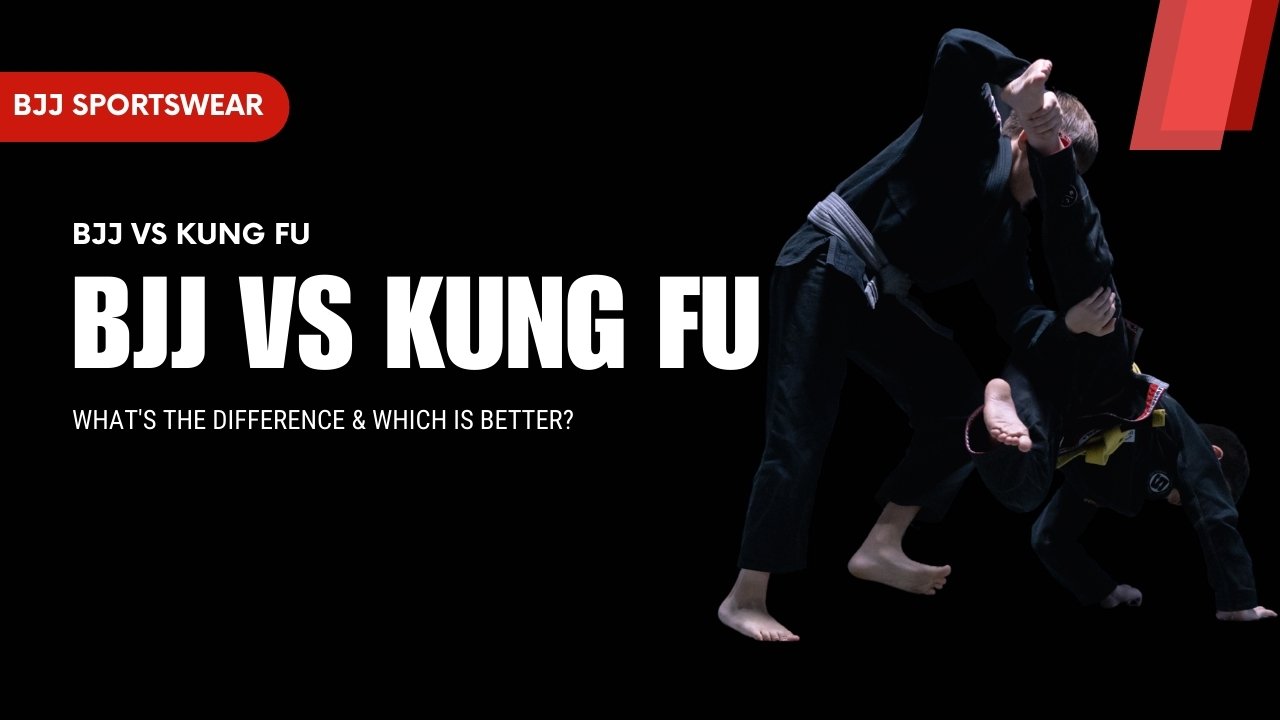
BJJ vs Kung Fu: Which Is Better? (2026 Complete Comparison)
Brazilian Jiu-Jitsu and Kung Fu represent fundamentally different martial arts philosophies—BJJ focuses on ground grappling, submissions, and live resistance training (rolling), while Kung Fu emphasizes striking, forms, and traditional techniques passed down through centuries. What makes this comparison essential for martial artists is practicality: BJJ has proven dominance in MMA and real-world self-defense through pressure-tested techniques, while Kung Fu’s effectiveness varies dramatically depending on style, school, and whether they emphasize sparring over traditional forms.
According to Novaki BJJ, Brazilian Jiu-Jitsu was designed and refined for real combat, particularly street fights and sport-based competition. Practitioners regularly engage in full-contact sparring (rolling), allowing them to test techniques under pressure. Kung Fu, on the other hand, varies significantly in effectiveness depending on the style and instructor—many traditional schools focus more on forms and philosophy than full-contact sparring.
Guto Campos BJJ emphasizes: Every roll on the mat is a live test of technique under resistance. It’s less about form and more about solving problems in real time. Students learn by doing, tapping, adjusting, and improving through constant feedback.
Whether you’re choosing between these martial arts for self-defense, fitness, or competition, understanding their fundamental differences, training methods, and real-world effectiveness will help you make the right decision for your goals.
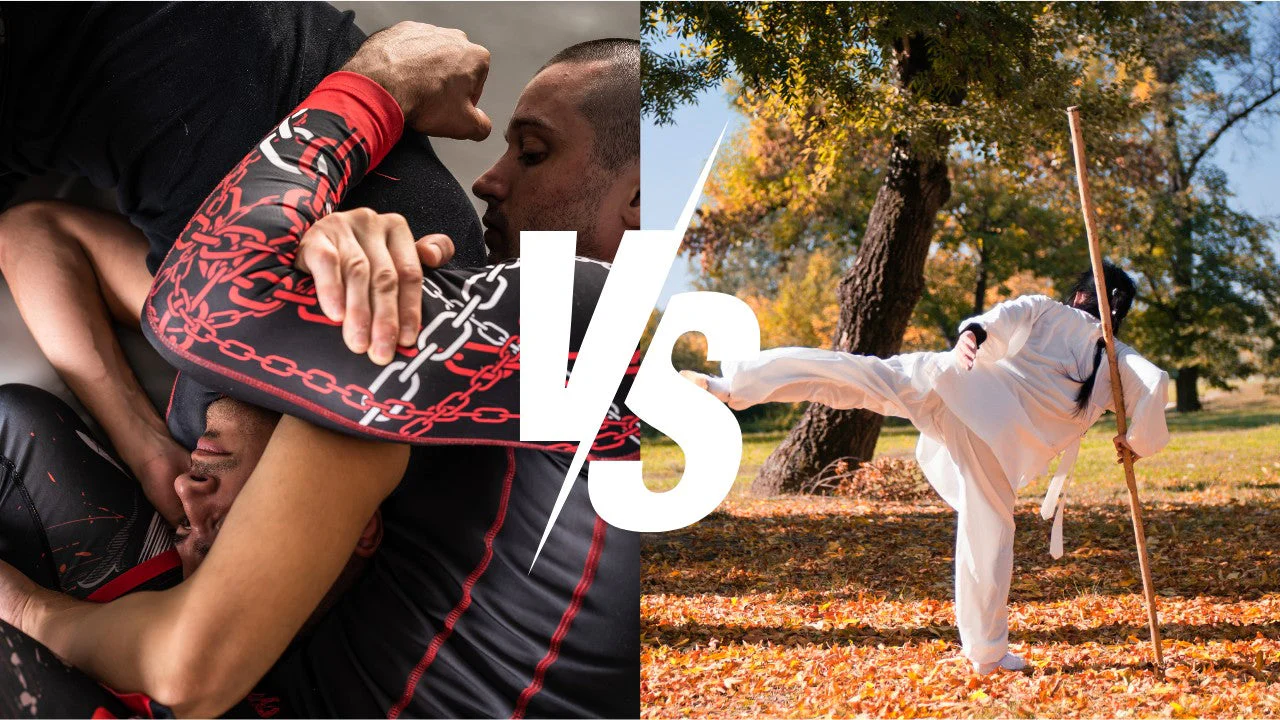
Table of Contents
Quick Comparison: BJJ vs Kung Fu
| Aspect | Brazilian Jiu-Jitsu | Kung Fu |
|---|---|---|
| Primary Focus | Ground grappling, submissions, positional control | Striking, forms, traditional techniques |
| Training Method | Live sparring (rolling) daily, technique drilling | Forms (katas), partner drills, limited sparring |
| Combat Range | Close range (clinch/ground) | Medium to long range (striking) |
| Self-Defense | Highly effective (proven in real scenarios) | Varies widely by style and school |
| MMA Effectiveness | Essential (all top fighters train BJJ) | Minimal (rarely seen in modern MMA) |
| Time to Proficiency | 2-3 years to blue belt | 2-5 years (depends on style) |
| Competition | Standardized (IBJJF, ADCC, NAGA) | Limited, varies by style |
| Belt System | Standardized globally | Varies by school/style |
| Injury Risk | Moderate (controlled submissions) | Low-moderate (less full-contact) |
| Fitness Benefits | Functional strength, cardio, flexibility | Agility, coordination, explosive power |
What Is Brazilian Jiu-Jitsu?
Brazilian Jiu-Jitsu is a grappling-based martial art that emphasizes ground fighting, positional control, and submissions (chokes and joint locks) to defeat opponents using leverage and technique instead of size and strength—making it the only martial art where smaller practitioners can consistently defeat larger, stronger opponents.
Core BJJ Principles:
- Ground fighting dominance
- Guard positions (controlling from your back)
- Positional hierarchy (mount, back control)
- Submission-focused (finish fights)
- Live resistance training (rolling)
- Leverage over strength
- Standardized belt system
- Proven MMA effectiveness
BJJ.Guide explains: BJJ focuses primarily on ground fighting, submission holds, and positional dominance. BJJ is more oriented towards self-defense and submission grappling.
BJJ Training Methods
Guto Campos describes: Technique drilling, live sparring (“rolling”), and positional learning. Every roll on the mat is a live test of technique under resistance.
Typical BJJ Class Structure:
- Warm-up (movement drills, shrimping)
- Technique instruction (15-20 mins)
- Positional drilling (partner resistance)
- Live rolling (sparring, 5-6 rounds)
- Cool down
Key Training Elements:
- Rolling – Live sparring with resisting opponents
- Positional sparring – Start from specific positions
- Drilling – Repetition of techniques
- Resistance-based – Every technique tested against opponent
White belt training focuses on fundamentals: mount escape, side control escape, back escape, and basic closed guard control.
Core BJJ Techniques
Fundamental Submissions:
- Rear Naked Choke – King of submissions from back
- Triangle Choke – Legs around neck
- Armbar – Hyperextend elbow
- Guillotine Choke – Front headlock
- Kimura – Shoulder lock
Guard Positions:
- Closed Guard – Legs locked around opponent
- Open Guard – Dynamic control without locked legs
- Butterfly Guard – Hooks inside thighs
- Spider Guard – Feet on biceps, gi control
- De La Riva Guard – Hook behind leg
Sweeps (Reversals):
- Scissor Sweep – First sweep white belts learn
- Butterfly Sweep – Elevation sweep from butterfly guard
Takedowns:
- Double Leg Takedown – Wrestling fundamental
- Single Leg Takedown – Versatile wrestling attack
What Is Kung Fu?
Kung Fu is an umbrella term for hundreds of Chinese martial arts styles emphasizing striking (punches, kicks, palm strikes), traditional forms (choreographed movement patterns), philosophy, and techniques refined over centuries—with effectiveness varying dramatically depending on style, lineage, and whether the school prioritizes practical sparring or traditional form preservation.
Common Kung Fu Styles:
- Wing Chun (close-range striking)
- Shaolin (traditional, forms-heavy)
- Sanda/Sanshou (Chinese kickboxing)
- Tai Chi (internal, slow movements)
- Hung Gar (powerful stances)
- Wushu (performance-oriented)
Core Kung Fu Principles:
- Striking techniques (punches, kicks)
- Forms/Katas (choreographed sequences)
- Traditional philosophy
- Circular motion and redirection
- Stand-up combat
- Weapon training (some styles)
- Pressure points (Qinna)
Kung Fu Training Methods
Guto Campos describes: Forms (katas), partner drills, stance work, and occasional sparring. Kung Fu classes emphasize forms, breathing, and rhythm before full sparring ever happens.
Typical Kung Fu Class:
- Stance training (horse stance, bow stance)
- Form practice (katas/patterns)
- Conditioning drills
- Partner drills (cooperative)
- Limited sparring (varies by school)
- Philosophy/meditation
Key Difference:
BJJ.Guide notes: Kung Fu training involves a combination of solo forms, partner drills, and sparring sessions. Solo forms, also known as “katas,” are choreographed sequences of movements that help develop muscle memory, balance, and coordination.
The Problem: Many traditional Kung Fu schools don’t emphasize full-contact sparring, limiting real-fight readiness.
BJJ vs Kung Fu: Key Differences
1. Combat Range
Guto Campos explains: Kung Fu operates at medium to long range, relies on timing, speed, and angle control. BJJ operates at close range, dominates by balance, grips, and pressure, not power.
Kung Fu:
- Prefers distance (striking range)
- Footwork and angles
- Quick in-and-out attacks
- Avoids clinch
BJJ:
- Dominates clinch/ground
- Once contact made, controls
- Guard positions neutralize striking
- Forces opponent into grappling range
2. Training Philosophy
Guto Campos contrasts: Kung Fu emphasizes forms, breathing, and rhythm before full sparring ever happens. BJJ students go hands-on from the start—drilling techniques, then testing them live through sparring (rolling). It’s a cycle of trial, failure, and adjustment, where every move is pressure-tested against resistance.
Kung Fu Approach:
- Master forms first
- Philosophy and tradition valued
- Gradual progression to sparring
- Emphasis on aesthetics
BJJ Approach:
- Live sparring from day one
- Pressure-test everything
- Tap, learn, adjust, repeat
- Function over form
3. Striking vs Grappling
Novaki BJJ analyzes: Kung Fu emphasizes striking techniques such as punches, palm strikes, kicks and elbows. BJJ, in contrast, focuses almost entirely on grappling and submissions. A skilled BJJ practitioner can take an opponent to the ground, neutralize their ability to strike and finish the fight without throwing a single punch.
Verdict: Kung Fu has the edge in striking; BJJ dominates in grappling.
4. Effectiveness in Real Fights
Novaki BJJ concludes: BJJ wins in terms of realism and hands-on fight application. Practitioners regularly engage in full-contact sparring (rolling), allowing them to test techniques under pressure.
Heythe Naji states: I think BJJ is the clear winner here. You’re out of luck with Kung Fu if you get taken down since it doesn’t have much for ground fighting. BJJ, on the other hand, lives for the ground game.
Why BJJ Wins:
- Pressure-tested techniques
- Daily live sparring
- Realistic scenarios
- Proven against resisting opponents
- Most street fights go to ground
Kung Fu Challenge:
- Varies by school/style
- Many lack live sparring
- Untested in real scenarios
- Effectiveness depends on instructor
BJJ vs Kung Fu: Self-Defense
BJJ.Tips emphasizes: BJJ is often considered more effective in real-life self-defense situations. The reason is its focus on ground fighting – a common scenario in street fights. BJJ techniques allow a person to defend against larger opponents effectively.
BJJ for Self-Defense
Advantages:
- Controls opponent without striking (legal implications)
- Works against larger attackers (leverage)
- Neutralizes strength advantage
- Forces submission without injury (if desired)
- Ground fighting (where most fights end up)
- Daily pressure-testing
Techniques:
Escapes from bad positions, takedowns to control, and submissions to finish.
Kung Fu for Self-Defense
Novaki BJJ notes: Kung Fu, depending on the style, can also be used for self-defense, especially with its fast strikes and pressure point attacks. However, the lack of live sparring in many schools means that practitioners may not develop the timing and reflexes needed under stress.
Advantages:
- Striking from distance
- Quick reflexes
- Pressure points (some styles)
- Weapon training (some styles)
Disadvantages:
- Limited ground fighting
- Varies by school
- Often lacks sparring
- Untested techniques
Novaki BJJ verdict: BJJ is generally more reliable for real-life self-defense.
BJJ vs Kung Fu: MMA Effectiveness
Novaki BJJ states clearly: BJJ is objectively more effective in MMA combat scenarios. Kung Fu has not made a significant impact in high-level MMA competition. While some individual techniques (e.g., spinning backfist or certain kicks) have been used, no pure Kung Fu fighter has risen to dominance in the MMA scene.
BJJ in MMA
Historical Dominance:
- Royce Gracie (UFC 1, 2, 4 champion)
- Proved grappling beats striking
- Every modern MMA fighter trains BJJ
- Essential for ground game
Modern Application:
- Submission finishes
- Ground control
- Takedown defense from guard
- Positional dominance
Kung Fu in MMA
Reality:
- Minimal representation
- No champions with Kung Fu base
- Some techniques borrowed (kicks, strikes)
- Not a primary MMA style
Why:
- Lacks ground fighting entirely
- Traditional forms don’t translate to live competition
- No resistance-based training in most schools
- Striking outclassed by Muay Thai/Boxing
Which Is Better for Beginners?
BJJ for Beginners
White belt curriculum is standardized globally:
First 6 Months:
- Mount escape – survival fundamental
- Side control escape – most common position
- Back escape – defensive essential
- Closed guard – offensive platform
- Scissor sweep – first sweep
Progression:
- Clear belt system (white → blue → purple → brown → black)
- 2-3 years to blue belt on average
- Measurable progress
- Standardized worldwide
Beginner-Friendly:
- Technique beats strength (size doesn’t matter)
- Safe training environment (tap to avoid injury)
- Immediate feedback (tap = mistake)
- Welcoming community
Kung Fu for Beginners
Challenges:
- Varies wildly by school/style
- Unclear progression (non-standardized belts)
- May take years before sparring
- Hard to measure effectiveness
- Aesthetics over function (some schools)
Advantages:
- Less intimidating (no live sparring initially)
- Cultural/philosophical elements
- Traditional discipline
- Forms provide structure
Strengths and Weaknesses
BJJ Strengths
- Highly effective in one-on-one combat
- Regular sparring develops real-world reflexes
- Great for self-defense and MMA
- Promotes problem-solving and patience
Additional Strengths:
- Leverage allows smaller vs. larger
- Proven in real scenarios
- Standardized training
- Complete submission system
BJJ Weaknesses
- Limited striking techniques
- Less effective against multiple attackers
- Training primarily focuses on one-on-one ground combat
- Risk of injury in intense rolling
Kung Fu Strengths
- Striking skills
- Footwork and agility
- Cultural heritage
- Philosophical depth
- Weapon training (some styles)
- Aesthetically impressive
Kung Fu Weaknesses
- Effectiveness varies dramatically
- Limited sparring (many schools)
- No ground fighting
- Untested techniques
- Quality depends entirely on instructor
- Impractical techniques (some schools)
Can You Train Both?
Yes! Many martial artists cross-train.
Complementary Skills:
- Kung Fu provides striking → BJJ covers grappling
- Complete martial artist
- MMA-ready approach
- Well-rounded self-defense
Challenges:
- Time commitment (6+ hours/week minimum)
- Different training philosophies
- Risk of “jack of all trades, master of none”
- Confusing muscle memory early on
Recommendation:
Master one first (2-3 years minimum), then add the other. Starting both simultaneously often leads to mediocrity in both.
The Final Verdict: Which Is Better?
Novaki BJJ concludes: When judged purely on fight effectiveness, practicality and combat-proven success, Brazilian Jiu-Jitsu comes out on top. It has repeatedly shown its dominance in MMA, its efficacy in self-defense and its reliable, realistic training methods.
Heythe Naji’s opinion: BJJ is better for self-defense. Kung Fu needs more ground techniques.
Choose BJJ If You Want:
- ✅ Proven self-defense effectiveness
- ✅ MMA-applicable skills
- ✅ Realistic, pressure-tested training
- ✅ Standardized progression (belt system)
- ✅ Competitive opportunities (IBJJF, ADCC, NAGA)
- ✅ Technique that works against larger opponents
Choose Kung Fu If You Want:
- ✅ Traditional martial arts experience
- ✅ Striking skills
- ✅ Cultural/philosophical depth
- ✅ Less intense training environment
- ✅ Forms and aesthetics
- ✅ Traditional discipline
The Bottom Line
- In an MMA cage? Go with BJJ.
- In a street fight? BJJ offers more practical tools.
- For fitness, discipline and striking fluency? Kung Fu is a solid choice.
- For proven one-on-one effectiveness? BJJ reigns supreme.
Frequently Asked Questions
Is BJJ better than Kung Fu for self-defense?
Yes, BJJ is generally more effective for self-defense because it focuses on realistic scenarios where most fights end up on the ground. BJJ practitioners train with live resistance daily (rolling), developing timing and reflexes under pressure. Kung Fu’s effectiveness varies widely—schools emphasizing sparring are more effective, but many traditional schools focus primarily on forms with limited live training, reducing real-world applicability.
Can you combine BJJ and Kung Fu?
Absolutely! Many martial artists cross-train to create a well-rounded skill set—Kung Fu provides striking, footwork, and stand-up fighting while BJJ covers grappling and ground fighting. However, mastering both simultaneously requires significant time commitment (6+ hours weekly minimum). Most experts recommend mastering one art first (white to blue belt in BJJ = 2-3 years) before adding the second to avoid becoming mediocre in both.
How long does it take to get good at BJJ vs Kung Fu?
BJJ takes approximately 2-3 years to blue belt with consistent training (3-4 sessions weekly), and proficiency develops through daily live sparring against resisting opponents. Kung Fu timelines vary dramatically by style and school—some emphasize years of forms before sparring, others integrate practical application earlier. BJJ’s standardized belt system provides clearer progression markers than Kung Fu’s varied ranking systems.
Which is harder to learn: BJJ or Kung Fu?
BJJ has a steeper initial learning curve because you’re constantly applying techniques against fully resisting opponents (sparring/rolling) from day one, which can be physically and mentally demanding but accelerates skill development through immediate feedback. Kung Fu’s difficulty varies—traditional schools emphasizing forms may feel easier initially but lack the pressure-testing that develops real combat skills, while Sanda/Sanshou schools with regular sparring present similar challenges to BJJ.
Does BJJ work against Kung Fu in a fight?
Yes, BJJ has proven effective against striking-based martial arts including Kung Fu in MMA competition and real confrontations. Once the fight enters clinch range or ground (which happens in most real fights), BJJ’s advantage becomes overwhelming—guard positions neutralize striking entirely, and submissions like the rear naked choke or armbar end fights quickly. Kung Fu’s lack of ground fighting training leaves practitioners vulnerable once taken down.
Which is better for fitness: BJJ or Kung Fu?
Both provide excellent fitness but through different methods. BJJ develops functional strength, cardiovascular endurance (rolling is exhausting!), and flexibility through intense grappling sessions that engage full-body muscles constantly. Kung Fu emphasizes agility, coordination, explosive power, and muscular endurance through forms, stance work, and striking drills. BJJ typically burns more calories per session (600-900) due to live sparring intensity, but Kung Fu offers lower-impact options suitable for broader age ranges.
Can beginners start with BJJ or should they learn Kung Fu first?
Beginners can absolutely start with BJJ—in fact, white belt curriculum is specifically designed for complete beginners with zero martial arts experience. BJJ’s technique-over-strength philosophy means size and athleticism aren’t prerequisites. Learning Kung Fu first isn’t necessary (or particularly helpful) for BJJ since the arts operate in completely different ranges and use opposite strategies. Start with whichever art aligns with your goals: BJJ for ground fighting/self-defense, Kung Fu for striking/traditional martial arts.
Getting Started with BJJ
If you’ve decided BJJ is right for you:
Beginner Resources:
- What is Guard in BJJ? – Fundamental concept
- BJJ White Belt Guide – Complete roadmap
- BJJ Belt System – Understand progression
- How Long to Get Black Belt – Realistic timelines
Essential White Belt Techniques:
- Mount Escape – Survival fundamental
- Scissor Sweep – First sweep
- Closed Guard – Defensive platform
- Rear Naked Choke – King of submissions
How We Reviewed This Article
Editorial Standards: Information verified through MMA competition results, BJJ instructional methodology, martial arts comparison analysis, and practitioner experiences in both arts. Effectiveness assessments based on documented competition outcomes, self-defense applications, and training methodology research.
Sources Referenced:
- Novaki BJJ (combat effectiveness analysis)
- Guto Campos BJJ (training methodology comparison)
- BJJ.Guide (technical differences)
- Elite Sports (practical applications)
- BJJ.Tips (self-defense effectiveness)
- Heythe Naji (practitioner perspective)
- Reddit r/martialarts (community insights)
Last Updated: January 14, 2026
2 thoughts on “BJJ vs Kung Fu: Which Is Better? (2026 Complete Comparison)”