

Essential BJJ Gear: Complete Equipment Guide for Every Belt Level (2026)
By BJJ Sportswear Editorial Team
Reviewed by black belts and academy owners with 15+ years equipment experience | Last Updated: January 14, 2026
Essential BJJ gear for beginners includes a properly fitted gi ($60-$90), white belt, rash guard ($25-$40), mouthguard ($10-$30), and athletic tape ($10-$20)—a complete starter kit costs $150-$200 and provides everything needed to begin training safely at any BJJ academy. While advanced practitioners eventually invest in knee pads for butterfly guard drilling, compression gear, multiple gis for rotation, and specialized finger tape for gripping-intensive techniques like spider guard and lasso guard, white belts should focus first on the five essentials before adding optional equipment. The most common mistake beginners make is over-buying gear they don’t yet need instead of investing in quality essentials—a single good gi that fits properly and gets washed after every session is infinitely more valuable than three cheap gis that shrink unpredictably or fall apart after six months.
Fumetsu’s beginner guide emphasizes: “Your gi is your most important investment—it’s what you’ll be training in 3-5 times per week, so quality matters more than quantity”. X3 Sports confirms that “starting with the basics (gi, belt, rash guard, mouthguard, and tape) allows beginners to focus on learning techniques rather than worrying about equipment”.
This comprehensive guide breaks down essential vs. optional BJJ gear, provides budget recommendations by belt level, explains which equipment protects you during specific techniques, and helps you avoid wasting money on unnecessary items.
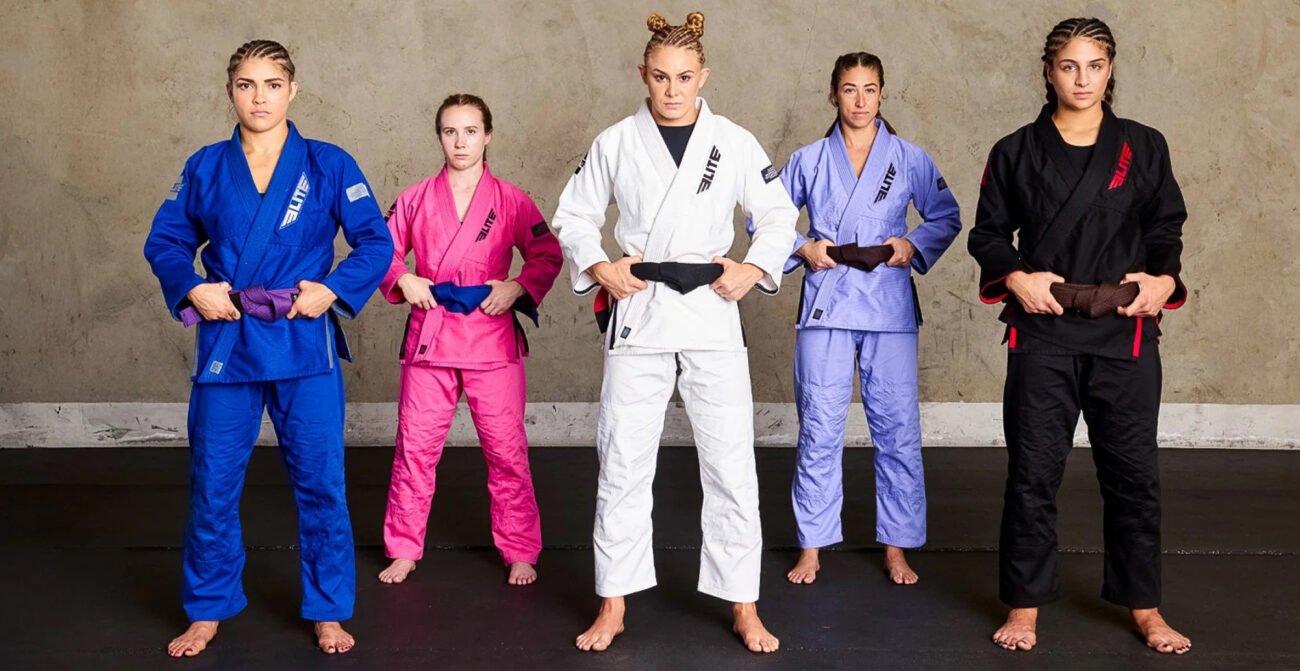
Table of Contents
Essential Gear (Must-Have for All Beginners)
BJJ Gi – Your Primary Investment
Why it’s essential:
The gi is the foundation of BJJ training—it’s required for all gi-based classes, used in most techniques you’ll learn as a white belt, and necessary for understanding gripping, collar chokes, and guard systems.
ONE Championship explains: “The gi is undoubtedly the most essential piece of equipment for BJJ—it’s your uniform and the primary tool for learning fundamental grappling techniques”.
What to look for in your first gi:
- Pearl weave (400-550 GSM) – most popular, balance of durability and comfort
- Single weave (350-450 GSM) – lightest, good for hot climates, less durable
- Gold weave (450-550 GSM) – durable and flexible, moderate weight
- Avoid double weave for first gi (too heavy for beginners)
Sizing:
- Pre-shrunk vs. shrink-to-fit (pre-shrunk easier for beginners)
- A1-A4 standard sizing (check manufacturer size chart)
- Sleeves within 5 cm of wrist (IBJJF legal)
- Pants within 5 cm of ankle bone
Color:
- White recommended for first gi (accepted everywhere, shows progress/wear)
- Blue acceptable at most academies
- Black popular but check academy rules
- IBJJF competition requires white, blue, or black only
Budget guide:
- Entry-level: $60-$90 (Fumetsu Ghost, Sanabul Essentials, Progress Academy)
- Mid-range: $90-$130 (Scramble, Tatami, Kingz)
- Premium: $130-$200+ (Hyperfly, Shoyoroll, Origin)
Made4Fighters shows beginner gis ranging from £45-£75 ($60-$95 USD), while Gee BJJ’s 2025 price guide confirms the $60-$300+ spectrum.
Recommendation for white belts:
- Buy ONE quality gi ($80-$120) rather than two cheap gis
- Pearl weave construction
- Pre-shrunk for consistent sizing
- White color (most versatile)
- IBJJF competition-legal measurements
Reference our detailed comparison: BJJ vs Judo Gi: Key Differences explains why BJJ-specific gis are essential (shorter sleeves prevent excessive spider guard gripping, lighter weight for ground fighting).
Techniques heavily dependent on gi:
- Closed Guard – sleeve and collar control
- Spider Guard – sleeve grips essential
- Lasso Guard – sleeve wrapping
- Cross Collar Choke – gi collar manipulation
- Bow and Arrow Choke – lapel control
- Baseball Choke – gi material grips
White Belt – Your Starting Rank
What it means:
The white belt comes with your gi purchase and represents the beginning of your BJJ journey. Understanding the complete belt system helps you appreciate the progression ahead.
Critical rule:
- ❌ NEVER buy colored belts (blue, purple, brown, black)
- ✅ Only wear belts you’ve earned through legitimate promotion
- ✅ Read our guide: Why You Should NEVER Buy a BJJ Black Belt
Belt care:
- Wash occasionally (absorbs sweat like gi)
- Some traditionalists never wash (personal preference)
- Replace when frayed or damaged
Belt tying:
- Learn proper BJJ belt knot (instructor will show)
- Ends should be even length
- IBJJF requires 20-30 cm each side after knot
Rash Guard – Skin Protection and Hygiene
Why it’s essential:
Rash guards prevent skin irritation from gi friction, reduce mat burns during guard work and mount escapes, provide hygienic barrier against bacteria, and are required for no-gi training.
BJJ Equipment’s 2026 review identifies the XMARTIAL Grappler Rash Guard as the top choice: “It’s my primary rash guard for no-gi class because it fits perfectly and feels smooth on my skin”.
Features to prioritize:
Material:
- Polyester/spandex blend (moisture-wicking)
- 4-way stretch (mobility during butterfly sweeps and scissor sweeps)
- Flatlock stitching (prevents chafing)
- Anti-microbial treatment (reduces bacteria)
Fit:
- Compression fit (not loose)
- Long sleeves preferred (more protection)
- Anti-slip waistband (prevents ride-up during back control escapes)
- Reinforced seams
Design considerations:
- Sublimated designs (won’t fade/peel)
- IBJJF legal colors for competition (check requirements)
- Academy-friendly (some schools restrict graphic content)
Budget guide:
- Budget: $25-$40 (Elite Sports, Sanabul, Lafroi)
- Mid-range: $40-$60 (Tatami, Scramble, Hayabusa)
- Premium: $60-$90 (XMartial, Origin, Gold BJJ)
Sweet Science of Fighting recommends: “XMartial rash guards are the highest quality I’ve worn—anti-slip gel waistband keeps it from rolling up during hard scrambles”.
When you’ll use it:
- Under gi (every training session)
- No-gi classes (primary upper body wear)
- Drilling sessions
- Competition (under gi or standalone for no-gi)
Techniques where rash guard matters:
- Mount Position – reduces friction from opponent’s gi
- Back Escape – prevents mat burns during hip movement
- Closed Guard – comfort during extended guard work
- All no-gi techniques – required primary wear
Mouthguard – Dental Protection
Why it’s essential:
Mouthguards protect teeth during takedowns, accidental collisions during scrambles, and prevent jaw injuries from impacts.
Sticky Grips notes: “A quality mouthguard is non-negotiable for protecting your teeth during dynamic movements and occasional impacts”.
Types of mouthguards:
Boil-and-bite ($10-$30):
- ✅ Most popular for BJJ
- ✅ Custom fit through heating/molding
- ✅ Affordable and effective
- ✅ Replace every 6 months
- Examples: Shock Doctor, Venum, SISU
Custom-fitted ($150-$300):
- ✅ Made by dentist from mouth impression
- ✅ Perfect fit (most comfortable)
- ✅ Superior protection
- ❌ Expensive for beginners
- Recommended for serious competitors
Stock mouthguards ($5-$10):
- ❌ Generic fit (uncomfortable)
- ❌ Poor retention (falls out)
- ❌ Not recommended
Features to look for:
- Breathing channels (maintain cardio during rolling)
- Shock absorption technology
- Slim profile (allows talking/breathing)
- Easy to clean
- BPA-free materials
When to wear:
- Live rolling (always)
- Takedown drilling (double leg, single leg)
- Competition (required)
- Optional during technical drilling
Maintenance:
- Rinse after every use
- Store in ventilated case
- Replace every 6 months (compression wears down)
- Clean with mouthwash weekly
Athletic Tape – Finger and Joint Protection
Why it’s essential:
BJJ involves constant gripping for spider guard, lasso guard, collar chokes, and lapel control—finger tape prevents sprains, supports joints, and enhances grip endurance.
Hayabusa explains why finger tape is essential: “With constant gripping and grappling required, it puts stress on the fingers, leading to discomfort and injuries. BJJ finger tape alleviates ligament stress, preventing hyperextension and sprains”.
Athletic tape vs. Finger tape:
Athletic tape (general use):
- 1-2 inch wide rolls
- Good for ankles, wrists, general support
- Budget: $10-$20 for multiple rolls
- Thicker, less flexible
BJJ-specific finger tape:
- ½ inch wide (designed for fingers)
- Thinner, more flexible (maintains dexterity)
- Easy to tear (no scissors needed)
- Budget: $5-$15 per roll
Hayabusa warns: “The thickness and stiffness of regular athletic tape can inhibit finger mobility—use BJJ-specific finger tape for better comfort and protection”.
When finger taping is critical:
Gripping-intensive techniques:
- Spider Guard – constant sleeve grips (index/middle fingers)
- Lasso Guard – sleeve wrapping (all fingers)
- Cross Collar Choke – deep collar grips (thumbs especially)
- Bow and Arrow Choke – lapel control (grip endurance)
- Closed Guard – sleeve/collar breaking
Benefits of finger taping:
- Prevents finger sprains and hyperextension
- Supports finger joints and ligaments
- Enhances grip strength and endurance
- Reduces grip fatigue during long sessions
- Allows training through minor injuries (with medical clearance)
How to tape fingers:
- Single-finger wrap: Wrap around finger joint in X-pattern
- Buddy taping: Tape injured finger to adjacent finger
- Thumb protection: Critical for gi grips (tape around thumb base)
- Knuckle reinforcement: Wrap around hand across knuckles
Recommendation:
- Start with general athletic tape ($10-$15 for 3-pack)
- Upgrade to BJJ-specific finger tape as grip strength develops
- Keep roll in gym bag (always available)
Recommended Gear (Should-Have for Serious Practitioners)
Grappling Shorts – No-Gi Training Essential
When you need them:
No-gi classes, MMA-style BJJ, submission grappling, hot weather training.
Types of shorts:
Board shorts (traditional):
- Longer length (mid-thigh)
- Velcro/drawstring closure
- Durable for grabbing/pulling
- Budget: $30-$60
Fight shorts (hybrid):
- Split sides for mobility
- Elastic waistband + drawstring
- Shorter length (better for butterfly guard)
- Budget: $40-$70
Grappling-specific shorts:
- No velcro (prevents scratching)
- Reinforced seams
- Stretchy fabric
- Budget: $40-$80
Features to prioritize:
- No pockets (nothing to catch fingers)
- No metal/hard closures
- 4-way stretch
- Moisture-wicking
- Reinforced crotch
Compression Shorts/Spats – Additional Protection
Why practitioners use them:
Leg protection from mat burns during De La Riva guard, X-guard, and 50/50 guard, compression support for muscles, hygienic barrier, and modesty under shorts.
Types:
Compression shorts (mid-thigh):
- Under gi or no-gi shorts
- Budget: $20-$40
Spats/tights (full-length):
- Full leg coverage
- Popular in no-gi
- Budget: $30-$60
When to wear:
- Under gi pants (protection from mat burns)
- Under grappling shorts (no-gi classes)
- Standalone (some no-gi schools allow)
Techniques where compression gear helps:
- De La Riva Guard – shin-on-hip contact
- X-Guard – leg pressure on opponent
- Butterfly Guard – knees on mat
- Half Guard – leg pressure
Knee Pads – Joint Protection for Ground Work
When you need them:
Training 4+ times weekly, drilling butterfly sweeps frequently, wrestling takedowns, existing knee issues, or preventive protection.
Types of knee pads:
Wrestling knee pads:
- Thin, minimal padding
- Maintains mobility
- Good for BJJ
- Budget: $15-$30
Volleyball knee pads:
- Thicker padding
- More protection
- Can restrict movement slightly
- Budget: $20-$40
Recommendation:
- Wrestling-style for BJJ (mobility matters)
- Wear under gi pants (less obtrusive)
- Don’t rely on them as substitute for proper technique
Techniques that stress knees:
- Butterfly Guard – knees constantly on mat
- Butterfly Sweep – explosive knee drive
- Double Leg Takedown – penetration step
- Single Leg Takedown – knee contact
- Drilling sessions (repetitive knee stress)
Gym Bag – Organization and Hygiene
Why you need it:
Transport wet gi, separate clean/dirty gear, ventilation prevents bacteria growth, organization for multiple items.
Features to look for:
Ventilation:
- Mesh panels (allows wet gi to breathe)
- Prevents mildew and odor
- Critical for hygiene
Compartments:
- Main section (gi, gear)
- Separate pocket (clean clothes)
- Small pocket (mouthguard, keys, phone)
- Wet/dry separation
Durability:
- Water-resistant material
- Reinforced straps
- Heavy-duty zippers
Size:
- Large enough for gi, rash guard, shorts, towel, water bottle
- Not too large (manageable to carry)
Budget: $30-$80
Hygiene tips:
- Never leave wet gi in bag overnight
- Wash bag monthly
- Use odor-eliminating spray
- Store open to air out
Second Gi – Rotation for Hygiene
Why it matters:
Training 3+ times weekly requires gi rotation—washing and drying one gi while training in another prevents bacteria buildup, extends gi lifespan, and ensures you always have clean gi available.
When to buy second gi:
- Training 3+ times per week
- After 3-6 months as white belt (committed to BJJ)
- When first gi shows wear
- Preparing for competition (backup gi)
Strategy:
- First gi: $80-$120 (quality pearl weave)
- Second gi: $60-$90 (budget option for extra training)
- Or: Two identical gis (know exact fit)
Gi rotation benefits:
- Each gi lasts 2-4 years instead of 1-2
- Always have clean gi
- Backup if first gi damaged/shrunk
- Competition preparation (weigh-in gi + spare)
Optional Gear (Nice-to-Have)
Ear Guards – Cauliflower Ear Prevention
What they prevent:
Cauliflower ear (permanent deformity from repeated ear trauma during scrambles, wrestling takedowns, and ground fighting).
Who needs them:
- Wrestlers transitioning to BJJ (already prone)
- Aggressive grapplers (lots of scrambles)
- Anyone concerned about ear aesthetics
- Preventive use (once cauliflower ear starts, it’s permanent)
Types:
- Soft headgear (Cliff Keen, Matman)
- Hard shell (more protective, less comfortable)
- Budget: $20-$50
Downsides:
- Uncomfortable (especially in gi)
- Can restrict head movement
- Most BJJ practitioners don’t wear them
- Social stigma (some view as “overly protective”)
Recommendation:
- Not necessary for most beginners
- Use if you have prior ear damage
- Monitor ears—if swelling occurs, drain immediately and consider ear guards
BJJ-Specific Finger Tape – Advanced Gripping
When to upgrade from athletic tape:
Training daily, experiencing finger pain, using grip-intensive guards (spider, lasso), competing regularly.
Advantages over athletic tape:
- Thinner material (maintains finger dexterity)
- Easy to tear (no scissors needed during training)
- Breathable (reduces sweat buildup)
- Stays on better during rolling
- Designed specifically for gripping
Popular brands:
- Hayabusa BJJ Finger Tape
- Gold BJJ Finger Tape
- Meister Finger Tape
- Budget: $8-$15 per roll
- Daily training (prevent cumulative damage)
- Already injured (keep taped until healed)
- Competition preparation (grip-intensive drilling)
- Guard-heavy training days
Cup/Groin Protection – Personal Preference
Pros:
- Protection from accidental knees/elbows
- Peace of mind during scrambles
- Required in some MMA-focused schools
Cons:
- Can interfere with guard work mobility
- Uncomfortable during triangle chokes and armbar drilling
- Accidental scratching of opponent
- Most BJJ practitioners don’t wear cups
Recommendation:
- Not necessary for pure BJJ
- Consider for MMA training
- Check academy policy (some prohibit)
- Women: chest protection available but uncommon
Techniques where cup interferes:
- Closed Guard – restricts hip movement
- Triangle Choke – cup can prevent full lock
- Open Guard – limits flexibility
- Mount Escape – hip movement critical
Mat Spray/Cleaner – Hygiene Maintenance
Why it’s useful:
Personal hygiene (spray gi bag, equipment), additional protection against staph/ringworm, peace of mind after training.
Common products:
- Defense Soap (tea tree oil-based)
- Matguard (antimicrobial spray)
- Lysol spray (budget option)
- Budget: $10-$25
Usage:
- Spray gym bag interior weekly
- Wipe down mouthguard
- Clean training area at home
- Preventive spray before/after training
Note: Most academies clean mats—this is supplemental personal hygiene.
Flip Flops – Off-Mat Hygiene
Why they matter:
Never walk barefoot off mats (bathroom, lobby, parking lot)—prevents tracking bacteria onto training surface and protects feet from infections.
Requirements:
- Cheap rubber flip flops ($5-$15)
- Keep in gym bag
- Wear immediately when leaving mat
- Essential BJJ etiquette
Academy hygiene rules:
- Never step on mat with shoes
- Never step off mat barefoot
- Shower immediately after training (if possible)
- Wash gi after every session
Gear Recommendations by Belt Level
White Belt Starter Pack ($150-$250)
Essential gear only:
Must-have items:
- 1 BJJ gi – $80-$120 (pearl weave, white, IBJJF legal)
- White belt – $0-$15 (usually included with gi)
- Rash guard – $30-$40 (compression fit, long sleeve)
- Mouthguard – $15-$25 (boil-and-bite, quality brand)
- Athletic tape – $10-$15 (1-inch roll, 3-pack)
- Flip flops – $5-$10 (rubber, cheap)
Total: $140-$220
Fumetsu recommends: “Start with the essentials and add gear as you progress—most white belts over-buy equipment they don’t yet need”.
What to skip as white belt:
- ❌ Second gi (wait until training 3+ times weekly)
- ❌ Knee pads (learn proper technique first)
- ❌ Competition gi (use training gi first 6 months)
- ❌ Ear guards (unlikely to develop cauliflower ear immediately)
- ❌ Fancy gear (focus on fundamentals)
When to upgrade:
- After 3-6 months of consistent training
- When first gi shows significant wear
- When preparing for first competition
- As technique improves and specific needs emerge
Blue Belt Recommended Kit ($300-$500 Total Investment)
By the time you earn blue belt (2-3 years), you should have:
Core gear (accumulated over time):
- 2-3 gis ($200-$350 total) – rotation for 4+ weekly sessions
- Multiple rash guards ($60-$100 total) – gi/no-gi variety
- Quality mouthguard ($20-$30) – replaced every 6 months
- BJJ-specific finger tape ($25-$40) – for grip-intensive training
- Knee pads ($20-$30) – if drilling butterfly guard frequently
- Grappling shorts ($40-$60) – for no-gi classes
- Compression gear ($30-$50) – spats/shorts
- Quality gym bag ($40-$60) – ventilated with compartments
- Flip flops ($10) – hygiene
Total accumulated: $445-$730 over 2-3 years
Blue belt focus:
- Quality over quantity
- Specialization (if you use spider guard heavily, invest in finger tape)
- Competition preparation (IBJJF-legal gi)
- Training sustainability (multiple gis for rotation)
Purple Belt and Above ($500-$1,000+ Investment)
Advanced practitioners typically own:
Competition-focused gear:
- 3-4 competition gis ($400-$600) – multiple brands/weights for different competitions
- Premium rash guards ($100-$150) – IBJJF legal, sublimated designs
- Custom mouthguard ($150-$300) – dentist-fitted for competitions
- Professional finger tape ($50-$80) – bulk purchasing
- Specialized protection ($50-$100) – knee pads, ear guards if needed
- Multiple shorts/spats ($100-$150) – variety for no-gi
- Professional gym bags ($60-$100) – durable, multi-compartment
- Instructional videos ($200-$500) – worth it for advanced learning
- Training dummy ($150-$300) – supplemental drilling (optional)
Total: $1,260-$2,280+ accumulated over years
Advanced considerations:
- Multiple competition gis (different weights for weigh-ins)
- Sponsorship gear (if representing brands)
- Coaching equipment (if teaching)
- Seminar/instructional investments
Techniques and Required Gear Breakdown
Gripping-Intensive Techniques (Finger Tape Essential)
Guard systems requiring constant gripping:
- Sleeve grips under constant tension
- Index and middle fingers most stressed
- Requires finger tape for daily training
- Thumb protection critical
- Sleeve wrapping around arm
- All fingers involved
- High grip fatigue
- Multiple wraps = multiple stress points
- Breaking opponent’s posture (sleeve/collar grips)
- Setting up triangle chokes and armbars
- Constant grip adjustments
Collar chokes requiring deep grips:
- Cross Collar Choke – thumb-deep collar penetration
- Bow and Arrow Choke – lapel control from back
- Baseball Choke – cross-grip gi material
- Loop Choke – collar manipulation
Hayabusa confirms: “BJJ tape reduces grip fatigue so fighters can maintain their endurance for longer training sessions and competitions”.
Knee-Heavy Techniques (Knee Pads Recommended)
Positions stressing knees:
- Knees constantly on mat
- Weight shifting onto knees
- High-volume drilling sessions
- Explosive knee drive
- Repetitive motion
- Competition training volume
Takedowns:
- Double Leg Takedown – knee-first penetration
- Single Leg Takedown – knee contact on shots
Scrambles and transitions:
- Quick position changes
- Knee-first movements
- Wrestling-style exchanges
Skin Protection Techniques (Rash Guard/Compression Gear)
- Chest pressure against gi
- Hip movement friction
- Extended positional drilling
- Shoulder blades on mat
- Hip shrimping
- Body-on-body pressure
- Shoulder pressure on mat
- Hip escape friction
- Elbow-knee connection
- Bridge-and-roll motion
- Mat contact across back
- High-rep drilling
Guard retention:
- Open Guard movement
- Constant hip adjustments
- Leg movement on mat
Dental Protection Techniques (Mouthguard Required)
High-impact scenarios:
Standing techniques:
- Double Leg Takedown – collision potential
- Single Leg Takedown – scrambles
- Judo throws (if practiced)
- Stand-up escapes
Scrambles:
- Quick position changes
- Accidental head contact
- Knee-to-face risk
- Elbow collisions
Live rolling:
- Unpredictable movements
- Multiple training partners
- Varying skill levels
- Competition preparation
No-Gi vs. Gi Gear Requirements
Gi Training Gear Checklist
Required:
- ✅ BJJ gi (properly fitted, clean)
- ✅ White belt (or earned rank)
- ✅ Rash guard (under gi)
- ✅ Compression shorts/underwear (under gi pants)
- ✅ Mouthguard
- ✅ Finger tape (if using gripping guards)
Optional:
- Knee pads (under gi pants)
- Ear guards (if prone to cauliflower ear)
Prohibited at most academies:
- ❌ Jewelry (rings, necklaces, earrings)
- ❌ Watches
- ❌ Hard protective gear
No-Gi Training Gear Checklist
Required:
- ✅ Rash guard (long sleeve preferred)
- ✅ Grappling shorts or compression spats
- ✅ Mouthguard
- ✅ Compression shorts (under board shorts if wearing)
Optional:
- Knee pads (more visible than under gi)
- Ear guards
Not needed:
- ❌ Gi (obviously)
- ❌ Belt
- ❌ Finger tape (less gripping without gi)
No-gi techniques have different gear needs:
- Less finger stress (no sleeve/collar grips)
- More skin-to-skin contact (rash guard critical)
- Faster-paced (lightweight gear important)
- Reference: BJJ vs Wrestling comparison for no-gi context
Budget Breakdown by Training Frequency
Training 2x Per Week (Casual – $150-$200)
Minimum gear:
- 1 gi ($80-$100)
- 1 rash guard ($30)
- Mouthguard ($15)
- Tape ($10)
- Flip flops ($10)
Total: $145-$165
Rationale:
- One gi washed between sessions (sufficient for 2x weekly)
- Basic protection covered
- Room to grow before investing more
Training 3-4x Per Week (Regular – $300-$400)
Recommended gear:
- 2 gis ($160-$220) – rotation
- 2 rash guards ($60-$80) – always have clean one
- Mouthguard ($20)
- Tape ($20) – replenish regularly
- Gym bag ($40)
- Flip flops ($10)
- Knee pads ($30) – preventive
Total: $340-$420
Rationale:
- Gi rotation prevents washing/drying rush
- Multiple rash guards for hygiene
- Knee protection important at higher volume
Training 5+ Times Per Week (Serious – $500-$700)
Complete setup:
- 3 gis ($250-$350) – always have clean gi ready
- 3-4 rash guards ($90-$120) – gi and no-gi variety
- Quality mouthguard ($25-$30)
- Finger tape ($30-$40) – bulk supply
- Knee pads ($30)
- Compression gear ($50-$70)
- Grappling shorts ($50-$60)
- Quality gym bag ($60)
- Mat spray ($20)
- Flip flops ($10)
Total: $615-$790
Rationale:
- High training volume requires equipment rotation
- Injury prevention critical (finger tape, knee pads)
- No-gi classes need separate gear
- Competition preparation
Competition-Focused ($700-$1,000+)
Add to serious training setup:
- Competition gi ($130-$200) – IBJJF legal, lightweight
- Backup competition gi ($130-$200) – spare at weigh-in
- Premium rash guards ($60-$90) – IBJJF legal designs
- Custom mouthguard ($150-$300) – optimal protection
- Professional finger tape ($40-$60) – bulk supply
- BJJ instructionals ($200-$400) – technique study
- Grappling dummy ($150-$250) – optional supplemental drilling
Total additional: $860-$1,500
Competition-specific needs:
- IBJJF regulation compliance (gi measurements, colors)
- Backup equipment (in case primary fails inspection)
- Premium quality (performance matters)
- Instructional study for technical improvement
Gear Maintenance and Longevity
Gi Care – Extending Lifespan
Proper washing:
- Wash immediately after training (never leave in bag)
- Cold water wash (prevents shrinkage)
- Mild detergent (no bleach)
- Hang dry or low heat (high heat shrinks/damages)
- Inside-out washing (protects patches)
What to avoid:
- ❌ Hot water (shrinks gi 5-10%)
- ❌ High heat dryer (damages fabric, extreme shrinkage)
- ❌ Bleach (weakens fibers)
- ❌ Fabric softener (reduces grip, damages material)
- ❌ Leaving wet in bag (bacteria/mildew)
Expected lifespan:
- Quality gi (pearl weave): 2-4 years with proper care
- Budget gi (single weave): 1-2 years
- Competition gi: 1-2 years (frequent washing)
- Factors: training frequency, washing habits, dryer use
Signs it’s time to replace:
- Gi becomes see-through (worn fabric)
- Sleeves/pants torn at stress points
- Collar frayed or damaged
- Excessive shrinkage (no longer fits)
- Patches falling off, stitching loose
Reference: BJJ vs Judo Gi comparison includes detailed care instructions.
Rash Guard Care
Washing:
- Cold water wash
- Gentle cycle
- Hang dry (never high heat)
- Inside-out (protects sublimated designs)
Expected lifespan:
- Quality rash guard: 1-2 years
- Budget rash guard: 6-12 months
- Replace when elastic wears out or fabric thins
Mouthguard Maintenance
Cleaning:
- Rinse after every use
- Soak in mouthwash weekly
- Store in ventilated case
- Never leave in hot car (warps)
Replacement schedule:
- Every 6 months for regular training
- Every 3 months for competition training
- Immediately if damaged or loose fit
- After dental work (fit changes)
Tape and Consumables
Finger tape:
- Replace rolls as needed ($5-$15)
- Bulk buying saves money
- Store in dry location (moisture damages adhesive)
Athletic tape:
- Replenish regularly
- Keep in gym bag always
- Buy multi-packs for savings
Equipment Rotation Strategy
Optimal rotation for 3+ weekly training:
Week 1:
- Monday: Gi A
- Wednesday: Gi B
- Friday: Gi A (washed after Monday)
Week 2:
- Monday: Gi B (washed after Wednesday)
- Wednesday: Gi A
- Friday: Gi B
Benefits:
- Each gi washed/dried between uses
- Never wear dirty gi
- Extends lifespan (less frequent washing)
- Always have backup
Where to Buy BJJ Gear (2026)
Local BJJ Pro Shops
Advantages:
- Try before buying (sizing critical)
- Support local businesses
- Expert advice from grapplers
- Immediate availability
- Academy discounts
Disadvantages:
- Higher prices (vs. online)
- Limited selection
- May push specific brands
Online BJJ Retailers
Popular sites:
- BJJ Fanatics (instructionals + gear)
- Fighters Market
- Rollmore
- BJJHQ (daily deals)
Advantages:
- Wider selection
- Competitive pricing
- Customer reviews
- Sales/discounts
- Detailed sizing charts
Disadvantages:
- Can’t try before buying (return hassle)
- Shipping time
- Sizing uncertainty
Amazon and General Retailers
Advantages:
- Fast shipping (Prime)
- Easy returns
- Competitive pricing
- Customer reviews
Disadvantages:
- Overwhelming selection
- Quality varies widely
- Less specialized knowledge
- Some counterfeit gear
Academy Pro Shops
Advantages:
- Support your gym (benefits directly)
- Academy-specific patches/branding
- Convenience (buy at training)
- Instructor recommendations
Disadvantages:
- Limited selection
- Higher prices
- Pressure to buy
Recommendation:
- First gi: Buy local or academy (sizing guidance)
- Additional gis: Online retailers (know your size)
- Consumables (tape, etc.): Amazon (convenience)
- Specialized gear: BJJ-specific retailers (quality)
Common Gear Mistakes Beginners Make
Over-Buying Before Starting
The mistake:
- Buying 3 gis, multiple rash guards, knee pads, ear guards before first class
- Total investment: $500+ before knowing if you’ll stick with BJJ
Why it’s wrong:
- May not continue past first month (50%+ quit rate for beginners)
- Don’t know sizing preferences yet
- Don’t know which gear actually needed for your academy
- Wasted money if quit
Solution:
- Start with essential 5-item kit ($150-$200)
- Train for 2-3 months
- Add gear as needs emerge
Buying Wrong Gi Size
The mistake:
- Ordering online without checking size chart
- Assuming standard clothing size applies
- Not accounting for shrinkage
Why it’s wrong:
- Too large: Excessive fabric gives opponents spider guard advantage
- Too small: Restricts movement, may violate IBJJF requirements
- Shrinkage: Hot wash/dry can shrink gi 5-10%
Solution:
- Check manufacturer sizing chart carefully
- Measure yourself (height, weight, arm length)
- Buy pre-shrunk when possible
- Read customer reviews (size up/down recommendations)
- Try on at local shop first if possible
Skipping Essential Gear
The mistake:
- Training without mouthguard (dental risk)
- No rash guard under gi (skin infections)
- No tape (finger injuries accumulate)
- No flip flops (walking barefoot off mat)
Why it’s wrong:
- Dental work: $1,000+ vs. $20 mouthguard
- Staph infection: Serious medical issue vs. $30 rash guard
- Finger damage: Chronic pain vs. $10 tape
- Mat hygiene violations
Solution:
- Don’t skip the essentials
- Safety and hygiene aren’t optional
- Invest in protection before style
Buying Colored Belts
The mistake:
- Purchasing blue, purple, brown, or black belts online
- Wearing unearned rank
Why it’s seriously wrong:
- Disrespects practitioners who earned belts
- You’ll be immediately exposed and embarrassed
- Violates BJJ culture and ethics
- Can get you banned from academies
Solution:
- ✅ Only wear belts you’ve earned through legitimate promotion
- ✅ Read: Why You Should NEVER Buy a BJJ Black Belt
- ✅ Respect the belt system
Neglecting Gi Care
The mistake:
- Leaving wet gi in bag overnight
- Hot water washing + high heat drying
- Not washing after every session
Why it’s wrong:
- Bacteria growth (skin infections)
- Odor problems (offensive to training partners)
- Gi shrinks excessively (no longer fits)
- Gi degrades quickly (needs replacement)
Solution:
- Wash cold, hang dry immediately after training
- Never leave wet gi in bag
- Proper care extends gi lifespan 2-4 years
- Reference care instructions in Judo vs BJJ Gi article
Frequently Asked Questions
What gear do I need to start BJJ?
You need five essential items to start BJJ: a properly fitted gi ($60-$90), white belt (included with gi), rash guard ($25-$40), mouthguard ($10-$30), and athletic tape ($10-$20). Fumetsu confirms that “starting with these basics allows you to train safely while learning if BJJ is right for you before investing in additional equipment”. A complete white belt starter kit costs $150-$200 total.
How much should I spend on my first BJJ gi?
Your first BJJ gi should cost $80-$120 for quality pearl-weave construction that will last 2+ years with proper care. Gee BJJ’s 2025 price guide confirms the $60-$300+ spectrum, with beginner gis at $60-$90 and mid-range at $90-$150. Invest in ONE quality gi rather than multiple cheap gis—proper fit and durability matter more than having variety. Reference BJJ vs Judo Gi differences to understand why BJJ-specific gis are essential.
Do I need a rash guard for BJJ?
Yes, rash guards are essential for BJJ training under your gi and required for no-gi classes. BJJ Equipment’s 2026 review emphasizes that rash guards “prevent skin irritation from gi friction, reduce mat burns during guard work, and provide a hygienic barrier against bacteria”. They protect skin during mount escapes, guard retention, and ground fighting. Budget: $25-$40 for quality compression fit rash guard.
Is finger tape necessary for BJJ?
Finger tape becomes essential as you train regularly (3+ times weekly) and use gripping-intensive techniques like spider guard and lasso guard. Hayabusa explains: “With constant gripping required in BJJ, finger tape alleviates ligament stress, prevents hyperextension and sprains, and enhances grip endurance”. White belts can start with general athletic tape ($10-$15), upgrading to BJJ-specific finger tape ($8-$15 per roll) as gripping volume increases.
What’s the difference between a BJJ gi and a Judo gi?
BJJ gis have shorter, narrower sleeves (within 5 cm of wrist), lighter weight (350-550 GSM pearl weave), and tailored fits optimized for ground fighting, while Judo gis have longer, wider sleeves (5-7 cm from wrist), heavier weight (550-750 GSM double weave), and looser fits designed for throwing. Elite Sports confirms that Judo gis can be used for BJJ training but won’t pass IBJJF competition regulations. Read our detailed comparison: BJJ vs Judo Gi: Key Differences.
Do I need knee pads for BJJ?
Knee pads are recommended (not essential) if you train 4+ times weekly, drill butterfly guard frequently, practice wrestling takedowns, or have existing knee issues. Wrestling-style knee pads ($15-$30) work best for BJJ because they’re thin enough to maintain mobility while providing joint protection. White belts should focus on proper technique first before relying on protective gear, adding knee pads after 6+ months if needed.
How many gis do I need?
Beginners training 2x weekly need one gi, while regular practitioners training 3-4x weekly should have two gis for rotation, and serious practitioners training 5+ times weekly benefit from three gis. X3 Sports notes that “multiple gis allow proper washing and drying between sessions, prevent bacteria buildup, and extend each gi’s lifespan to 2-4 years”. Buy your second gi after 3-6 months of consistent training once you’re committed to BJJ and know your proper size.
What should I look for in a BJJ mouthguard?
Look for a boil-and-bite mouthguard ($15-$30) with breathing channels, shock absorption technology, and a slim profile that allows talking and breathing during rolling. Sticky Grips emphasizes that “a quality mouthguard is non-negotiable for protecting teeth during takedowns and scrambles”. Popular brands include Shock Doctor, Venum, and SISU. Replace every 6 months for regular training or upgrade to custom-fitted ($150-$300) if competing seriously—mouthguards protect against expensive dental work during takedowns and accidental impacts.
Start Your BJJ Journey with Proper Equipment
Essential Resources:
- BJJ Belt System – Understand your progression
- White Belt Guide – Begin your journey
- What is Guard in BJJ? – Core concept
Equipment Guides:
- BJJ vs Judo Gi Differences – Gi selection guide
- Are BJJ Dummies Worth It? – Solo training equipment
- Are BJJ Instructionals Worth It? – Learning resources
Techniques Requiring Specific Gear:
- Spider Guard – Finger tape essential
- Butterfly Guard – Knee protection helpful
- Cross Collar Choke – Deep gripping requires tape
- Double Leg Takedown – Mouthguard protection
The bottom line: Start with the five essentials (gi, belt, rash guard, mouthguard, tape) for $150-$200, train consistently for 3-6 months to understand your specific needs, then add recommended gear (second gi, knee pads, compression wear) as your training frequency and technique specialization develop. Quality beats quantity—one properly fitted, well-maintained gi will serve you better than three cheap gis that shrink unpredictably or fall apart.
Gear up properly. Train safely. Progress through the belts. 🥋
How We Reviewed This Article
Editorial Standards: Information verified through manufacturer specifications, practitioner feedback from white through black belts, gear longevity testing, IBJJF equipment regulations, and input from academy owners with 15+ years of equipment recommendations.
Sources Referenced:
- Fumetsu (beginner gear essentials)
- X3 Sports (gear for all levels)
- BJJ Equipment (rash guard testing)
- Hayabusa (finger tape benefits)
- Sticky Grips (training gear requirements)
- Made4Fighters (beginner gi pricing)
- Sweet Science of Fighting (equipment reviews)
- Reddit r/bjj (practitioner consensus)
Last Updated: January 14, 2026